The gateway India chose to be its front door
When independent India introduced its first definitive stamps in 1949, it chose monuments over leaders — among them Sanchi. The site returned on this 1994 definitive and on the 200-rupee note of 2017.
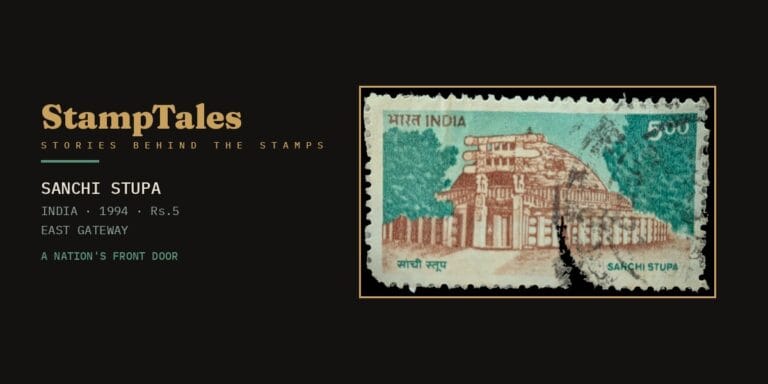
When independent India introduced its first definitive stamps in 1949, it chose monuments over leaders — among them Sanchi. The site returned on this 1994 definitive and on the 200-rupee note of 2017.
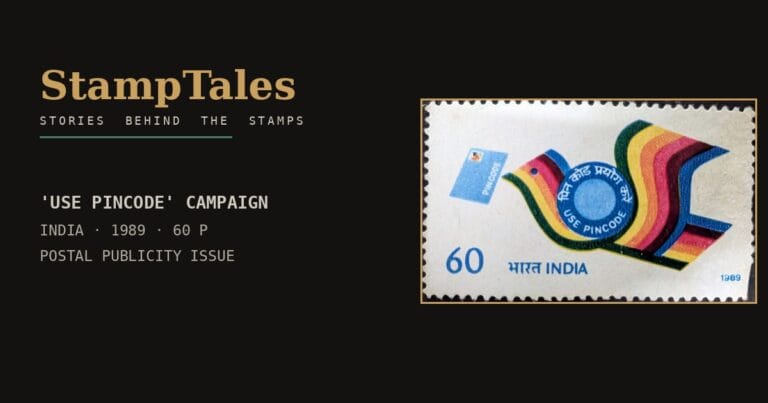
Seventeen years after India built its six-digit sorting system, the Post Office was still urging the public to write it down. In 1989 that reminder became a stamp.
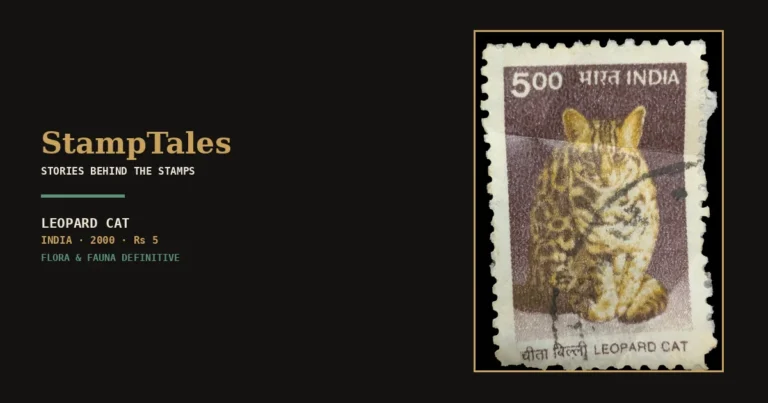
Not a leopard, not a cub – the small wild cat on this five-rupee definitive is the wild ancestor of the Bengal, the house cat bred to look wild.
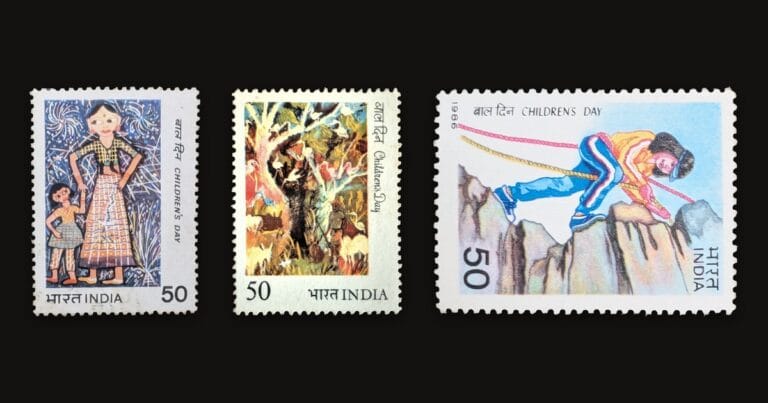
Three years running, India Post handed a stamp to a child. Each time the child painted something the occasion never asked for.
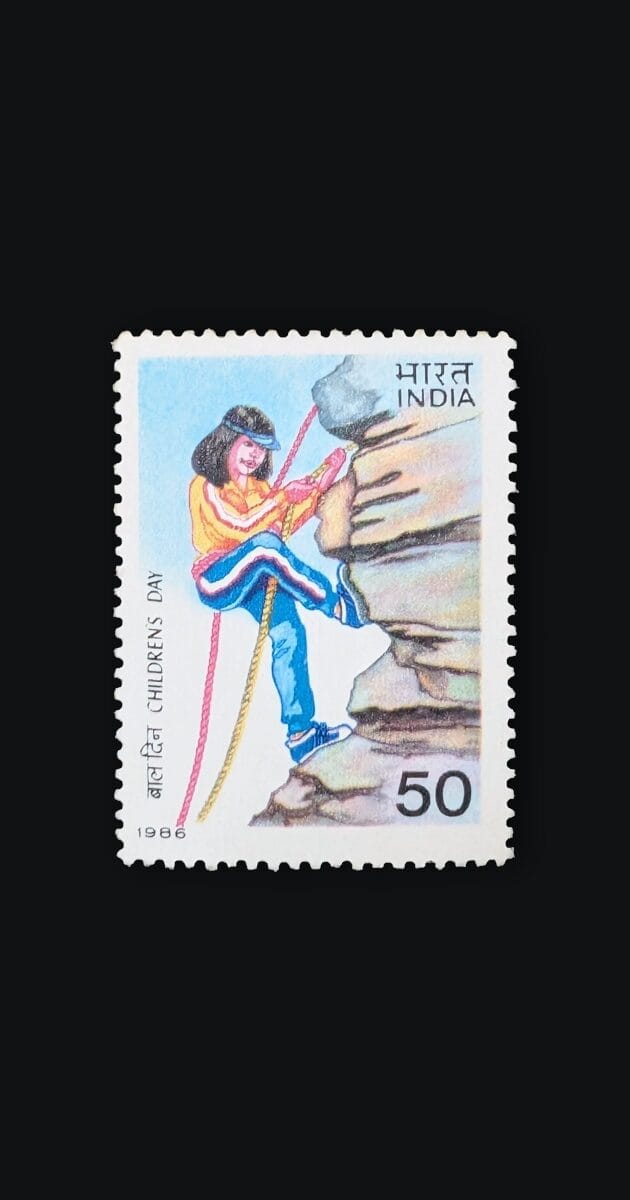
Two ropes cross this stamp and neither is tied to anything. The catalogue calls the picture “Girl Rock Climber.” The stamp never says so.
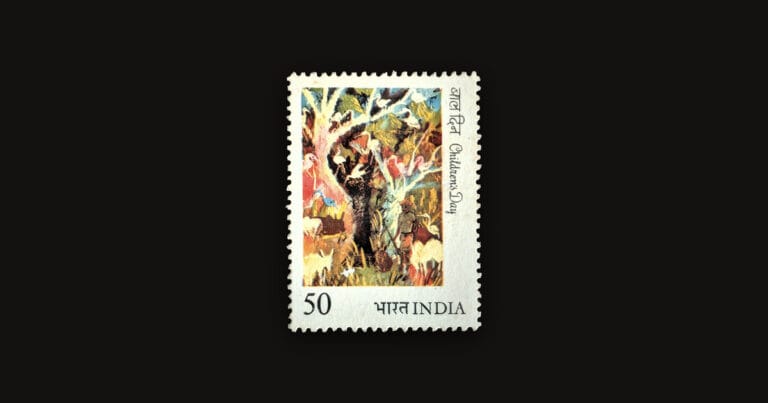
India Post handed a schoolchild a national stamp and asked for Children’s Day. He painted a tree full of birds, a herdsman, and not a single child.
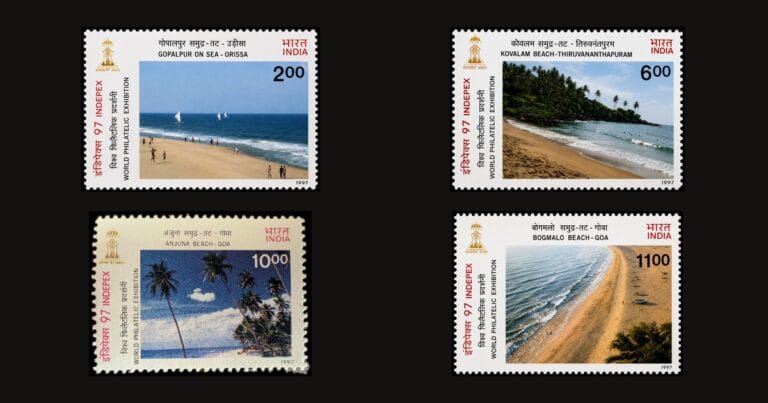
Four stamps, four Indian coastlines, one recurring pattern: the coastline stays, its history slips beyond the frame.
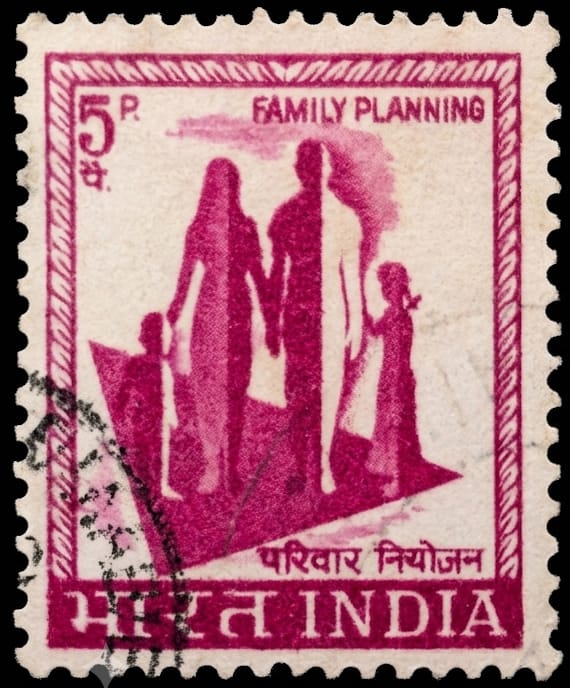
Across three decades and three definitive series, India Post printed its population policy onto the cheapest stamps in circulation. Then, one issue at a time, it stopped saying what it meant.