The Leopard Cat Behind the House Cat Bred to Look Wild
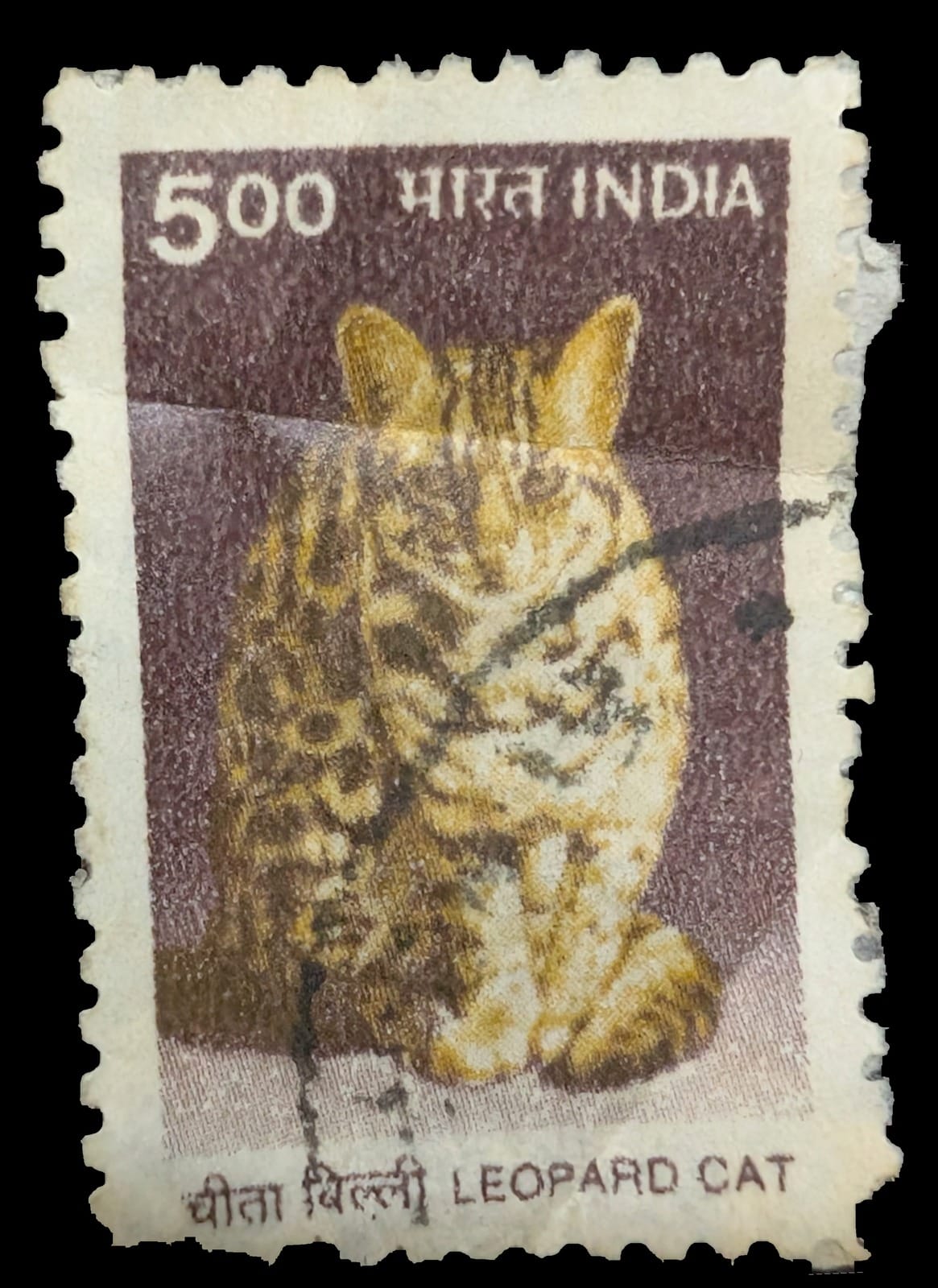
The animal on this five-rupee Leopard Cat stamp is not a leopard, and it is not a cub. It is a small wild feline, roughly the size of a domestic cat – and the wild ancestor of the Bengal, the house cat bred to look wild.
| Country | India |
|---|---|
| Series | 2000 Flora and Fauna definitives |
| Year | 2000 |
| Denomination | ₹5 |
| Subject | Leopard Cat (Prionailurus bengalensis) |
| Process | Photogravure |
| Watermark | Ashokan |
| Printer | India Security Press, Nashik Road |
| Catalogue | Phila D166 / SG 1928 |
An everyday Leopard Cat stamp
Definitives are the postal system’s small change. A commemorative asks to be remembered – it arrives with a first-day cover and a press note. A definitive is made to be used: low in value, plain, printed and reprinted for years. The cat riding on one is easy to overlook because a definitive’s job is repetition, not ceremony.
This Leopard Cat came out in 2000, one of India’s Flora and Fauna definitives – a wider group of native animals and plants that ran from a painted stork to a sarus crane, a rose to a butterfly. It was ordinary postage, not a commemorative for a single event. Which is exactly why the animal on it is so easy to miss.
Not a leopard
The name misleads, but only if you read “leopard” as a claim of kinship. “Leopard Cat” describes the coat, not the family tree. Prionailurus bengalensis is a small cat – roughly the weight of a domestic one, but longer in the body and leg, with the large eyes of a night hunter and a spotted, streaked coat. At a glance, that pattern can make a small wild cat look like a miniature leopard. The resemblance can be dangerous: leopard cats and other small cats have been mistaken for leopard cubs and killed.
None of this is because the animal is rare. Globally the leopard cat is one of the most widespread small cats in Asia, and the IUCN lists it as Least Concern. India still gives it the highest protection on its books – Schedule I of the Wildlife (Protection) Act, 1972, the same tier as the tiger, the common leopard and the Asiatic lion.
So here is a cat that is neither rare nor unprotected, yet obscure to most people. It hunts rodents, birds and lizards after dark through forest and farmland across South, Southeast and East Asia, and it has the single misfortune of looking like something more famous than itself.
The cat that walked into the living room
Here the small cat’s story turns strange. In 1963 a Californian, Jean Sugden – later Jean Mill – crossed a Leopard Cat with a domestic tom, wanting a house cat with a wild coat. A decade later, at Loma Linda University, the physician Willard Centerwall was crossing the same two species for a colder reason: leopard cats seemed to resist feline leukaemia, and he wanted to know whether the resistance would carry to their hybrids. When Centerwall’s program closed, Mill acquired F1 females from it, resumed her own breeding, and over years developed the cats that became the Bengal.
The name comes from the wild cat’s scientific epithet, bengalensis – “of Bengal” – not, as almost everyone assumes, from the Bengal tiger. The label points at a small spotted animal most people have never heard of, and the confusion does exactly what a good coat pattern does: it draws the eye to the wrong thing.
The Bengal is a domestic breed prized for carrying the leopard cat’s markings in an animal that will sit on a lap. And there the two versions of the same creature part ways. The wild original travels the post on a five-rupee stamp and ends up used and cancelled, parted from whatever it once carried. Its tamed descendant is sought out, named, and photographed. People will keep a diluted flash of the wild in the living room and never notice the wild thing itself on the envelope.
Named by resemblance, all the way down
Follow the names and nothing is quite what it claims. The Leopard Cat is not a leopard; it borrows the name from its markings. The Bengal is not a Bengal tiger; it takes its name from the wild cat’s epithet, bengalensis. Neither name tells you the whole story. Even the stamp is in on it – a genuine wild cat hidden in plain sight on the most disposable object in the postbox, a Schedule I animal reduced to loose change and slipped past everyone who handled the envelope.
Looking closer at the Leopard Cat stamp
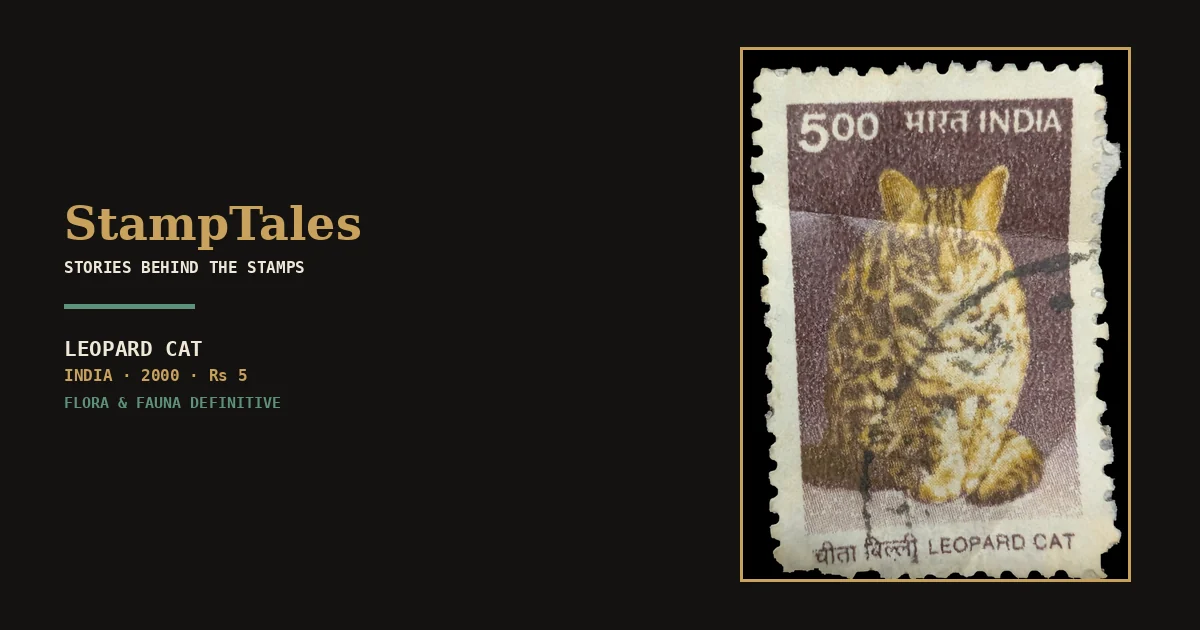
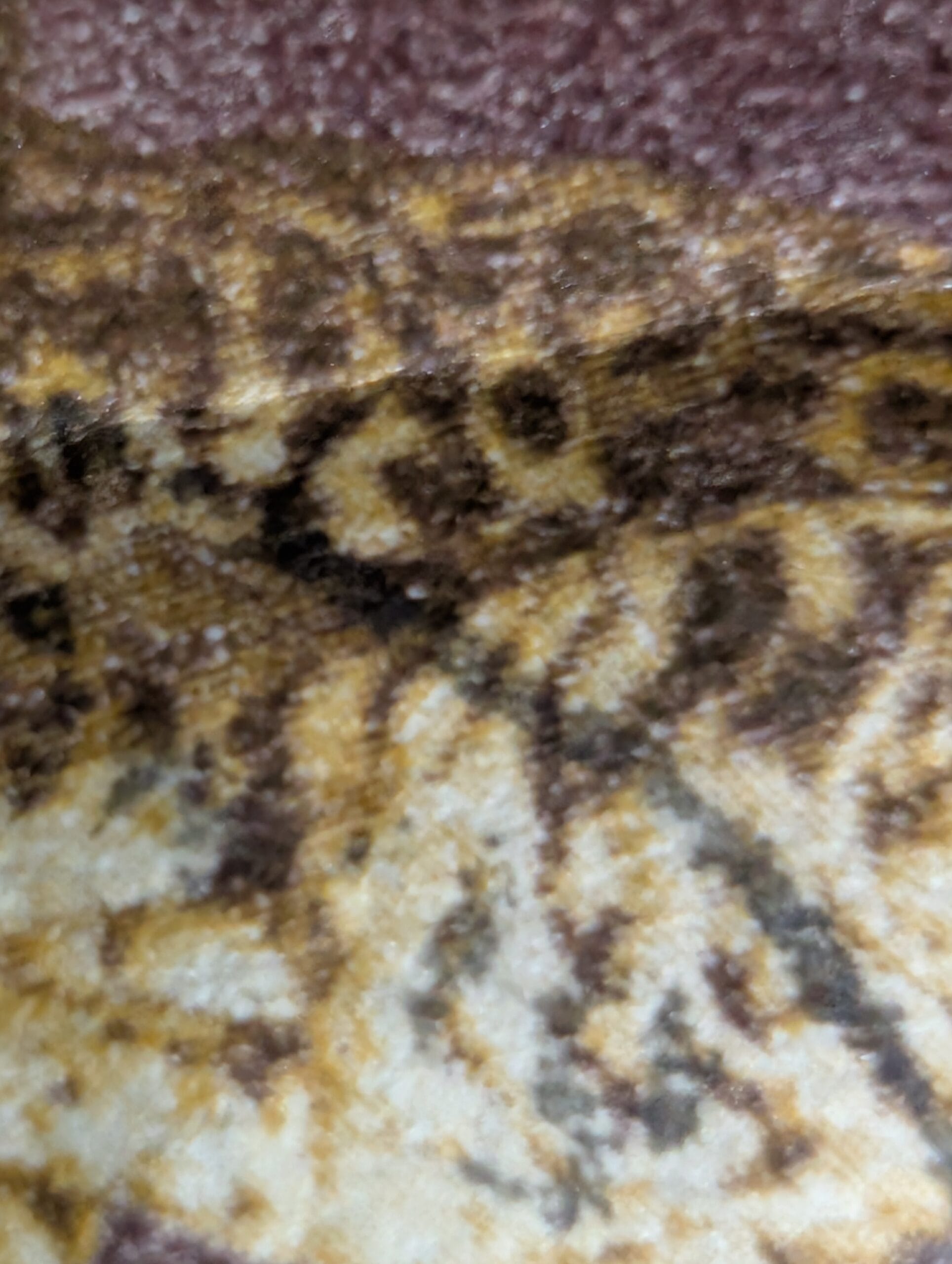
Up close, the stamp gives away how it was made. The fur is not drawn but screened: photogravure breaks the whole image into a fine grain, so the coat resolves into ochre-and-cream mottling rather than clean lines. The pose is naturalistic rather than heraldic – the cat sits frontal and upright, filling the frame against a muted aubergine ground, head tipped down rather than raised to meet the viewer.
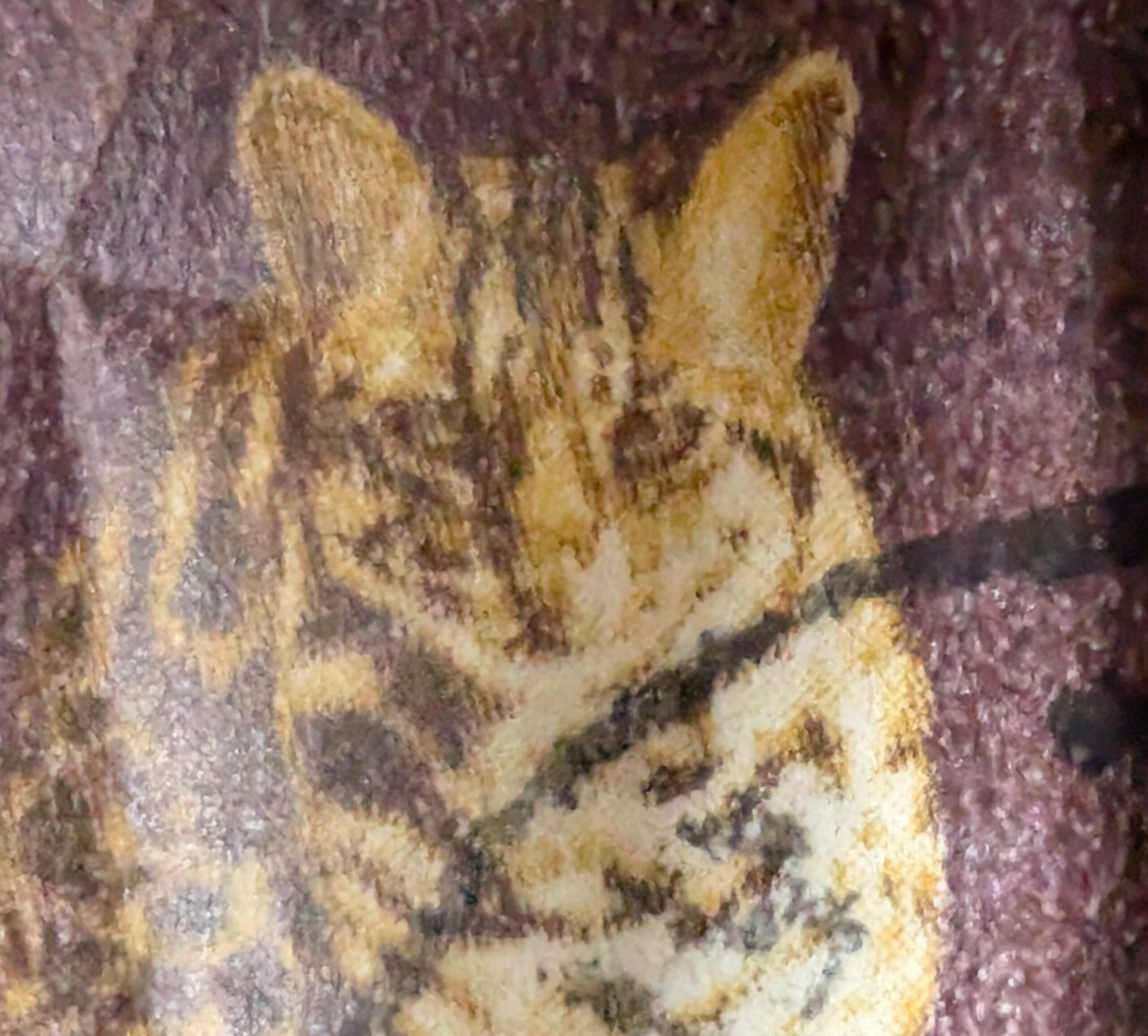
The coat pattern is the visual link between the wild animal and the breed it inspired: the dark spots and streaks that let a house-sized animal read as a big cat. The caption names it twice – cheeta billi in Hindi beside the English “Leopard Cat” – for a country that reads it both ways.
This copy
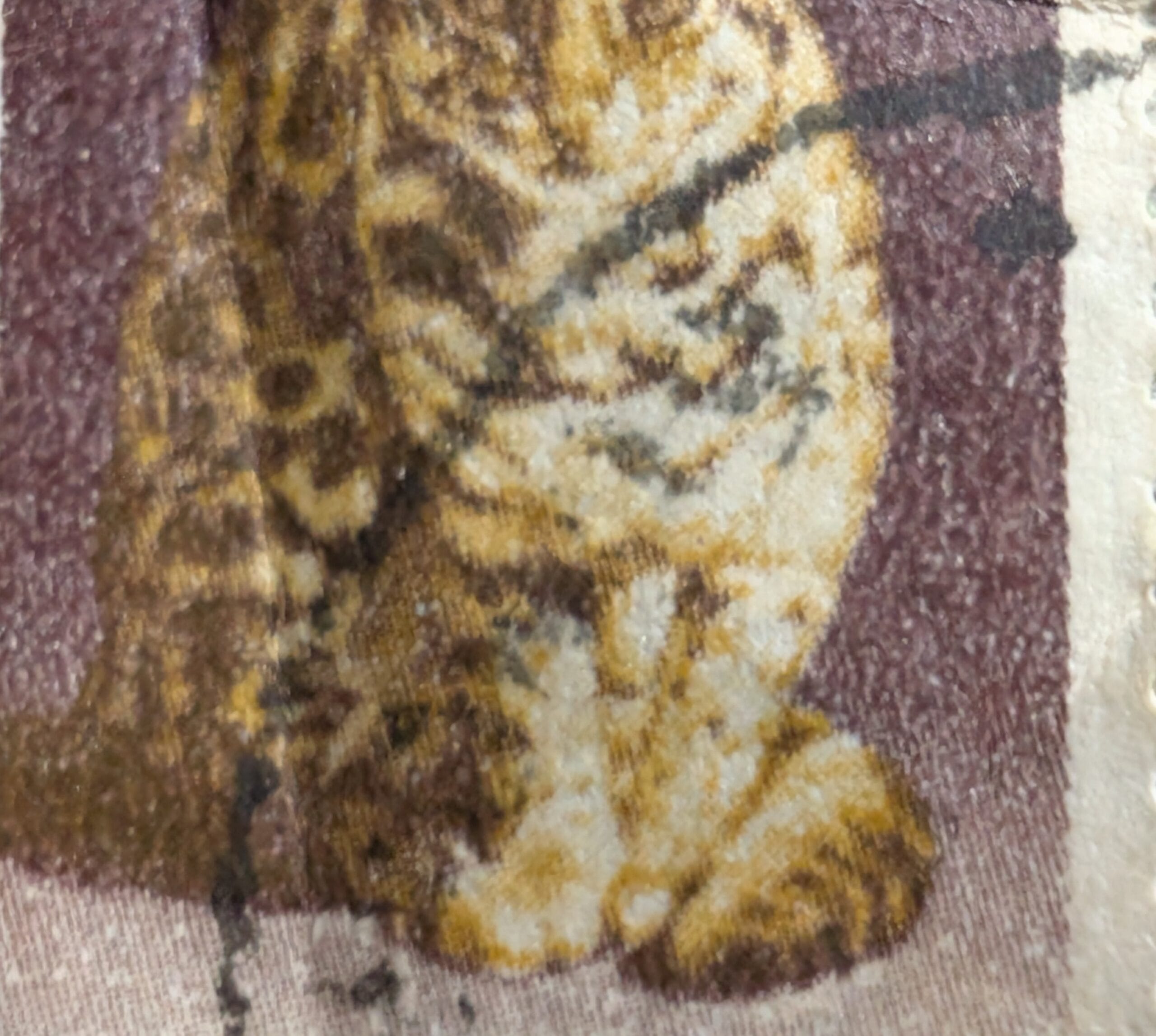
A single ink cancellation runs diagonally across the lower body, and a horizontal crease crosses the cat’s upper body, below the ears. The cancellation marks it as used; the crease is real damage, though nothing in the stamp tells us how it happened. It is the opposite of the pampered animal its bloodline produced: not preserved, but used up.
The Bengal was bred to make that wild look desirable. The Leopard Cat never needed the help – it came by the pattern honestly. On the five-rupee stamp, the original sits in plain view, recognisable only to someone who already knows what they are looking at.