The year India called people a resource
A 1994 Indian stamp printed the words human resource development in two scripts — nine years after India renamed a ministry with them, and twenty-six before it changed the name back.
Stories of stamps from specific historical moments.
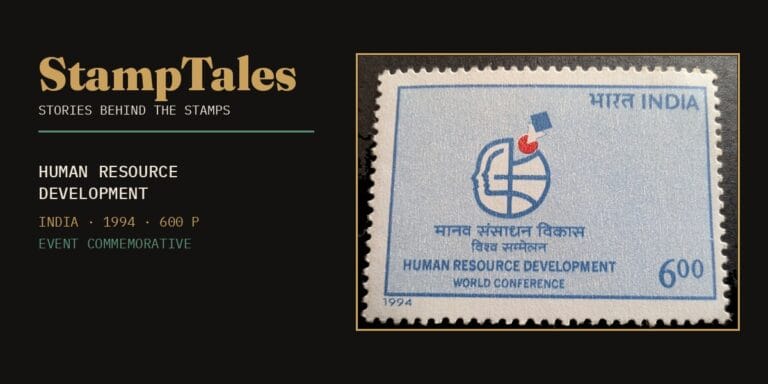
A 1994 Indian stamp printed the words human resource development in two scripts — nine years after India renamed a ministry with them, and twenty-six before it changed the name back.
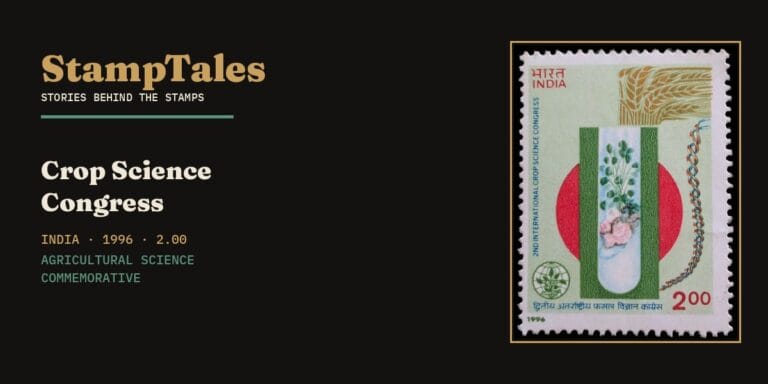
A 1996 Indian stamp that packs a century of plant breeding into one frame — and stays silent on the question its DNA helix had just made urgent: can a plant be owned?
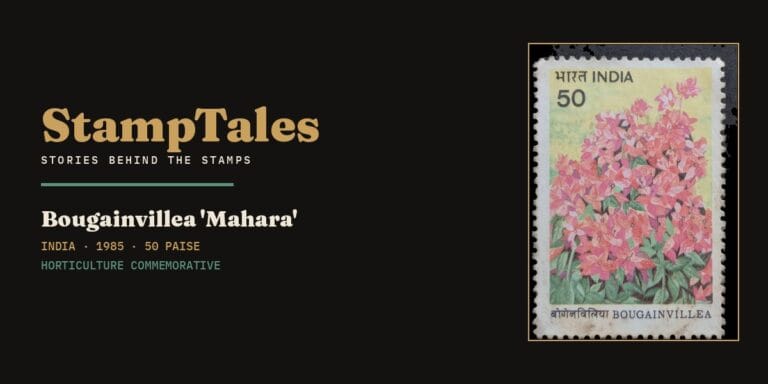
A 1985 Indian stamp that looks like a bunch of pretty flowers is in fact a portrait of one named, registered cultivar — nature given a pedigree and a place in a list.
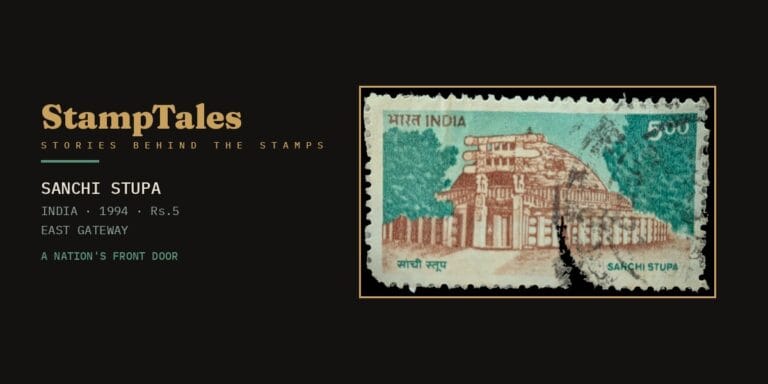
When independent India introduced its first definitive stamps in 1949, it chose monuments over leaders — among them Sanchi. The site returned on this 1994 definitive and on the 200-rupee note of 2017.
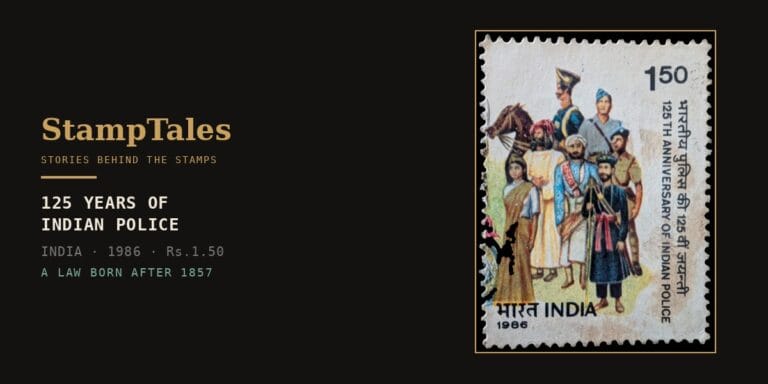
A 1986 stamp counts 125 years of Indian policing back to 1861 — the colonial law, written in the wake of 1857, that independent India never stopped using.
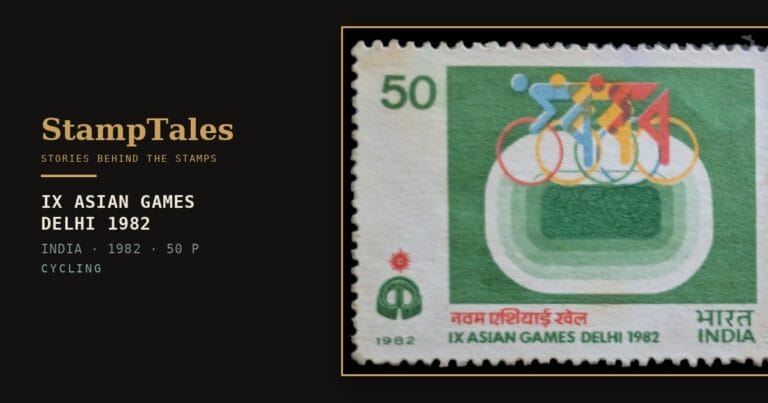
A 1982 Indian stamp that put three cyclists under the rising-sun rings of the Asian Games Federation — a body that had ceased to exist three days before the Games began.
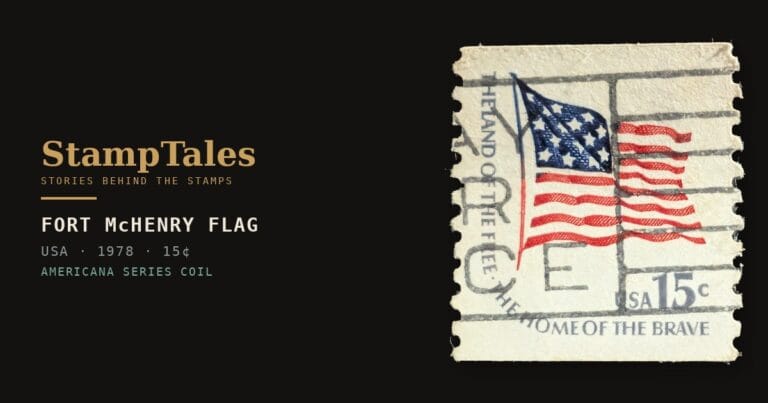
A 15-cent workhorse carrying the anthem’s closing line — issued, in this copy, as the one coil format that comes off the roll alone and never completes the four-stamp frame.

A 1988 Indian stamp where the denomination was the message — 60 paise for the age of 60, nearly two decades before the sentiment became law.
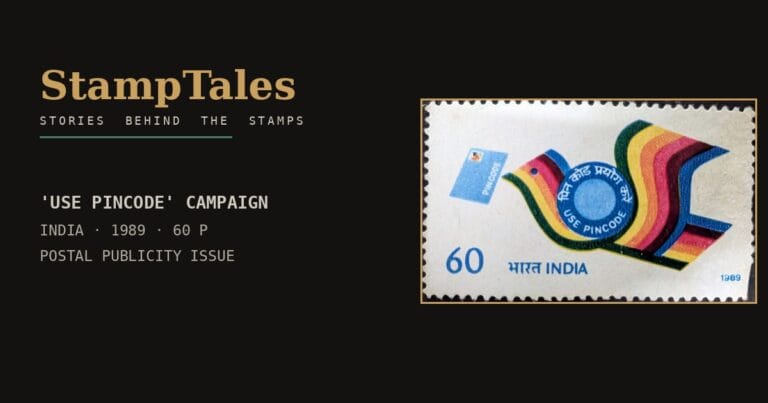
Seventeen years after India built its six-digit sorting system, the Post Office was still urging the public to write it down. In 1989 that reminder became a stamp.
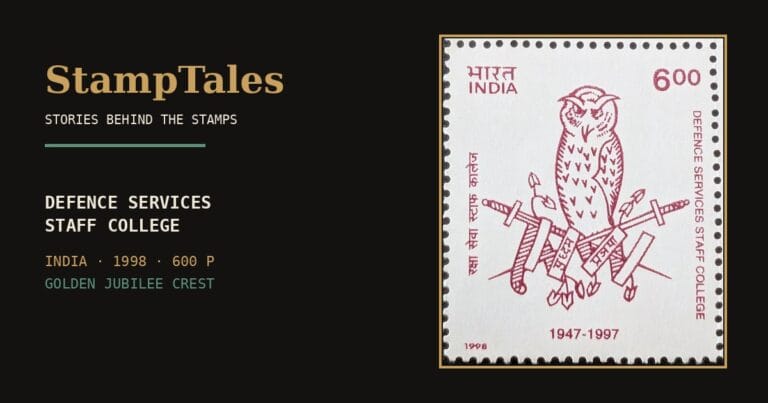
When India’s premier staff college kept the owl it inherited from a British crest, Army Headquarters rejected it as ill-omened and asked for a falcon. The bird won anyway – but it took sixteen years.