The 1984 Children’s Day Stamp With No Children On It
The 1984 Children’s Day stamp was designed by a schoolchild. He left the children out.
The Stamp
The Story
India Post asked a child to design a stamp about children. He drew birds.
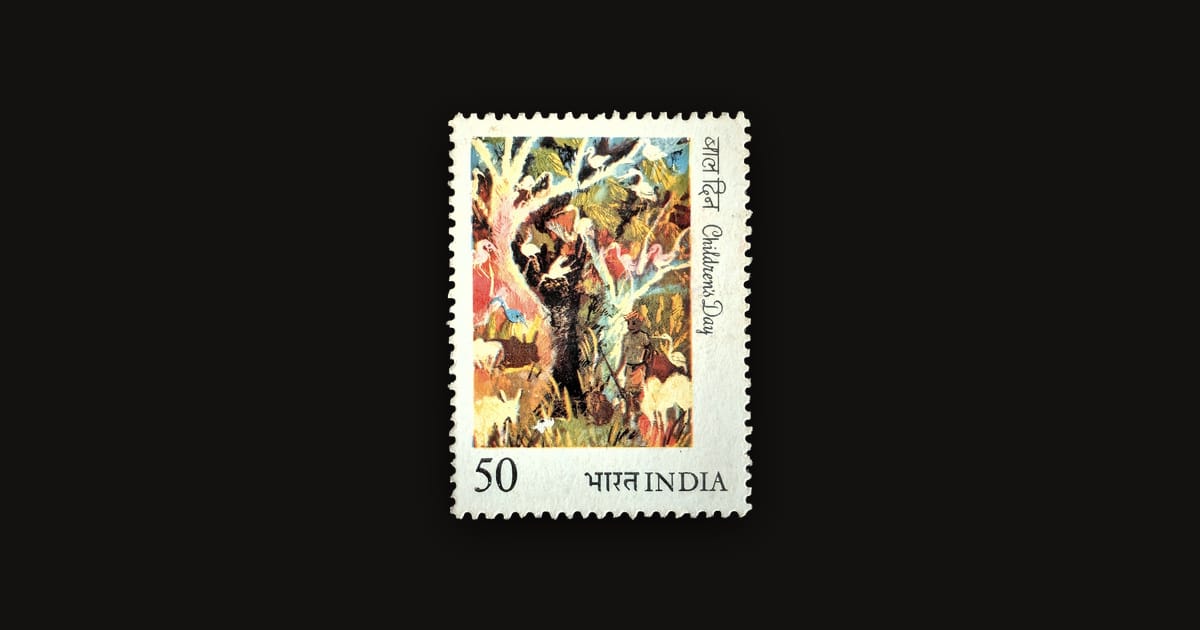
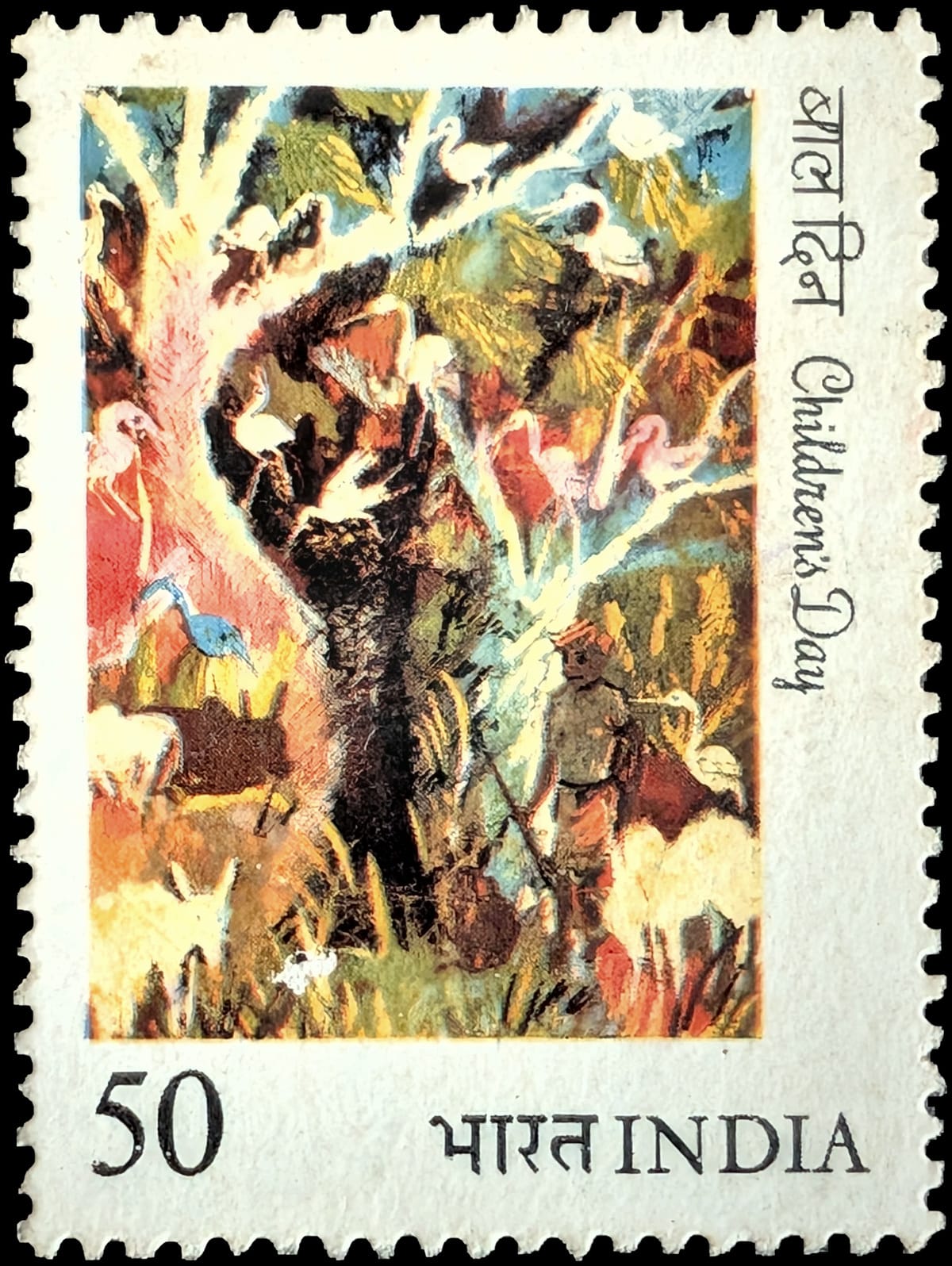
The 1984 Children’s Day stamp went to press with a forest, a herdsman and roughly two dozen white wading birds scattered through the branches — and not one child anywhere in the frame. The painting is titled “Herdsman and cattle in Forest.” Its author is recorded as H. Kassam, and that is very nearly everything anyone wrote down about him.
| Issue | National Children’s Day |
|---|---|
| Country | India — Department of Posts |
| Subject | “Herdsman and cattle in Forest”, a painting by H. Kassam |
| Issued | 14 November 1984 |
| Denomination | 50 paise |
| Occasion | Children’s Day, marked annually on Jawaharlal Nehru’s birthday |
| Catalogue | Phila 984 · SG 1137 |
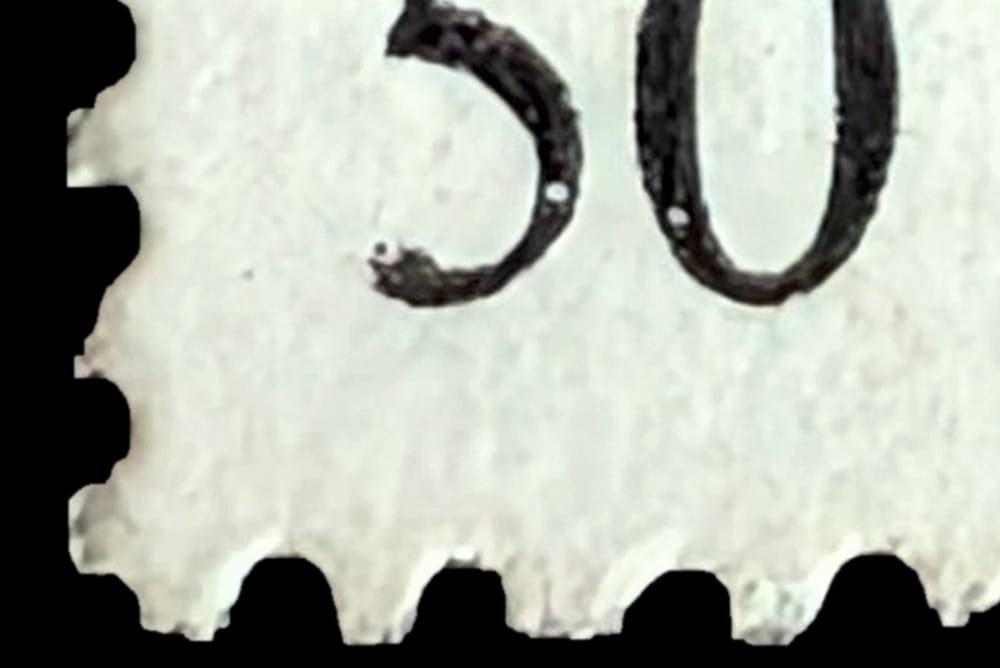
| Condition of this copy | Unused, no cancellation. Even cream toning. One blunted perforation tooth on the lower-left edge. |
Fourteen years of being looked after
To see why the absence matters, look at what the Children’s Day stamp used to be.
India began the series in 1957 with a set of three. For the first decade the subjects read like a list of government departments. Nutrition. Education. Recreation. A nurse with a child patient. Boys awaiting admission to a children’s home. Children’s health. A child at a lathe. School meals.
Every one of those stamps shows a child receiving something — food, a vaccine, a classroom, a bed, a trade. The child is the object of the picture and never its author. These are welfare posters at 8 and 15 paise, and they are perfectly sincere. India in the late fifties had a great deal to be sincere about, and a postage stamp was one of the few images the state could put into every household in the country.
But look at who is speaking. Each Children’s Day stamp of that period was made by adults, about children, for adults to look at. The child in the frame is evidence of a programme working. He is not a person with a view.
That reading holds without strain across 1957 to 1966: the flag being passed to youth, the boy at the lathe, the queue outside the children’s home. Even the 1964 issue, which marks Children’s Day with Nehru’s portrait taken from a commemorative coin, puts an adult at the centre of the children’s stamp.
What happens when you hand over the pencil
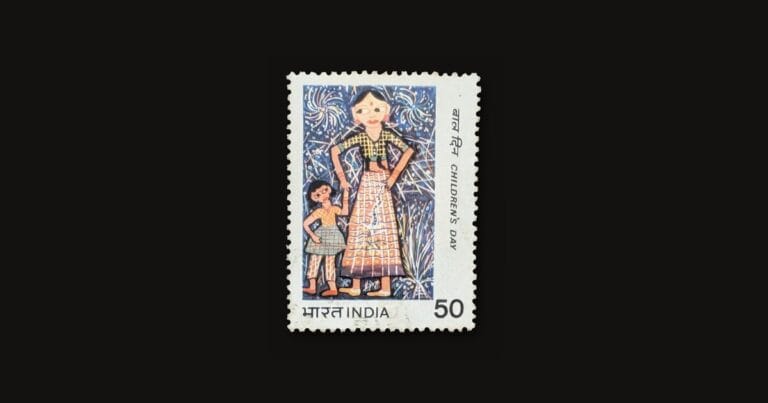
In 1971 the series changed shape. The Children’s Day stamp that year carried a painting called “Women at Work” by Geeta Gupta, credited on the issue under her own name. From that point the design came from a child, selected through a national drawing competition, and the winner’s name went into the record alongside the catalogue number.
The subjects changed immediately, and they changed in a direction nobody would have predicted from the previous decade.
A cat. A cow. A mongoose. Two cats. Friends. Two friends. A toyseller. Girls dancing. A mother and child. Not one of them is about nutrition, education, health or vocational training. Given a national platform and complete freedom, Indian schoolchildren drew the animals in their street and the people they liked.
There is something quietly funny about this and something quietly serious. For fourteen years the state used the Children’s Day stamp to show what it was doing for children. The moment children got to choose, the topic of child welfare disappeared from the stamp entirely and never came back in that form.
By 1984 the pattern had held for thirteen years, and that year’s Children’s Day stamp produced its purest example. H. Kassam did not draw children. He did not draw himself. He drew a tree.
What the Children’s Day Stamp Actually Shows
Strip away the context and the 1984 Children’s Day stamp is simply a painting of a tree, and the painting is dense to the point of claustrophobia. A dark trunk runs up the centre, almost black, and everything else — foliage, sky, birds, ground — is packed around it in bands of red, ochre, olive and a cold blue that never quite resolves into sky. There is no horizon and no depth. The forest presses flat against the front of the picture.
The white birds are the organising device. They sit in the crooks of branches, on the ground, half-hidden behind leaves, and once you start counting them you keep finding more. Several are three strokes and a dot, and they still read unmistakably as birds at stamp size.
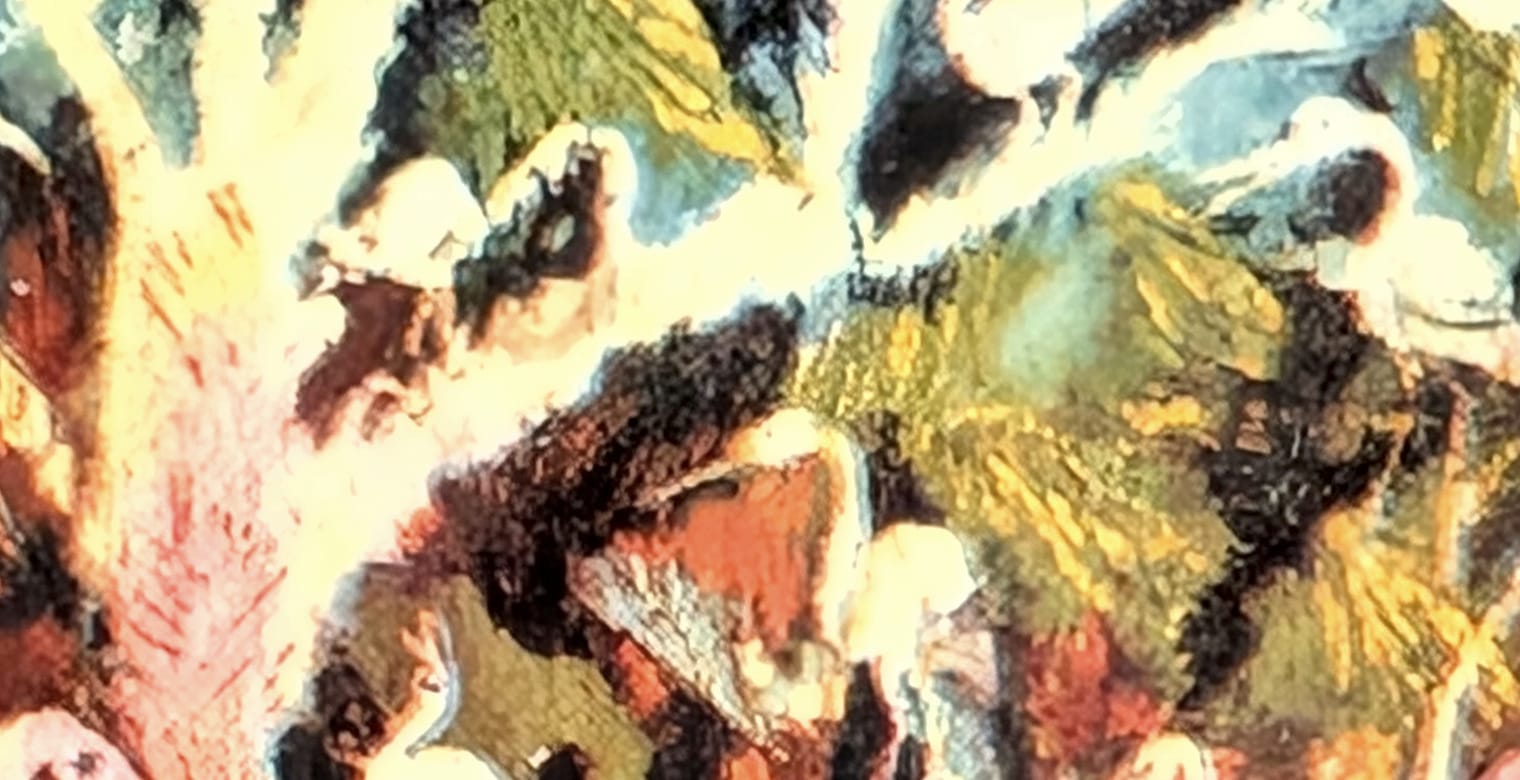
A blue-and-orange bird sits at the left edge, the only cool accent in a composition otherwise built entirely from heat. It is also the only bird given a colour of its own. Everything else white is part of a flock; this one is a specific creature, and it has been placed exactly where the eye enters the picture.
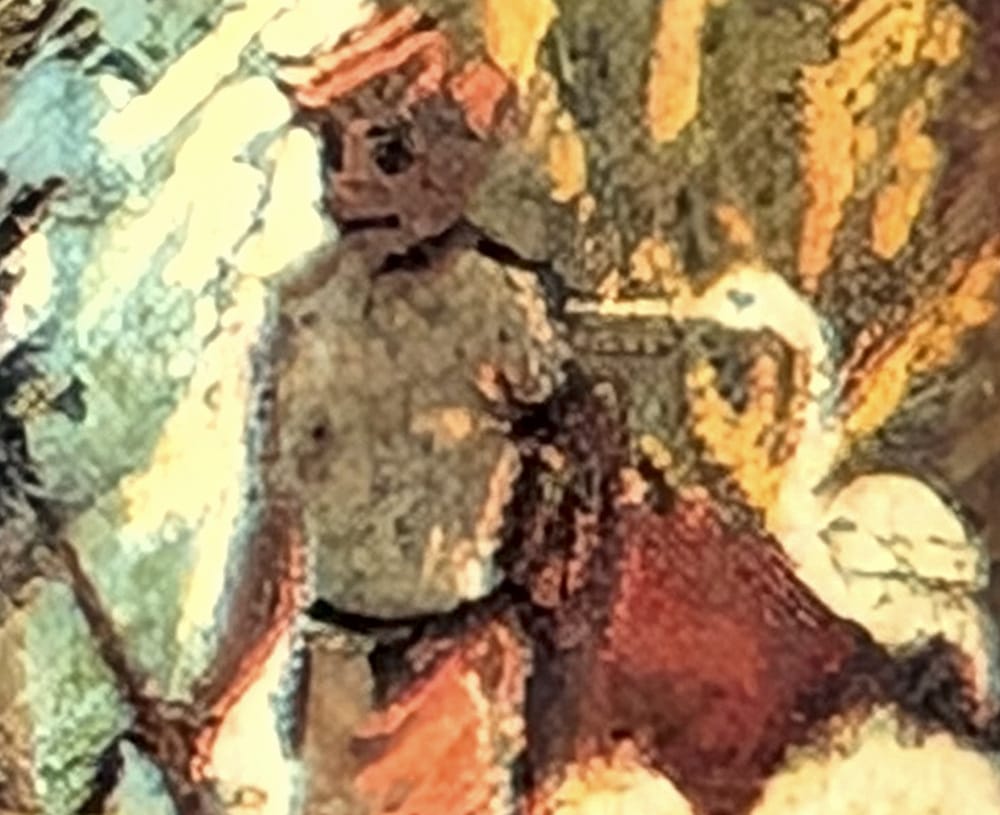
The herdsman is at the lower right — small, dark, in a cap, beside a pale animal. He is painted with markedly less definition than the birds: a smudge with a hat where the white shapes get clean, confident strokes. Whether he is meant to be an adult or a child, the paint does not say and the title does not either.
Five days in November
There is a second story in this stamp, and it is not in the artwork at all. It is in the release calendar.
India Post’s previous commemorative that year went out on 23 October 1984. Indira Gandhi was assassinated on 31 October. The next stamp India put into circulation was the Children’s Day stamp, on 14 November — a forest full of birds, painted by a schoolchild, arriving in a country that had spent a fortnight in shock and, in several cities, in violence.
Five days after the Children’s Day stamp, on 19 November, came the 50 paise Indira Gandhi commemorative, diamond-shaped and black-bordered. The World Mining Congress followed on the 20th. The machinery of routine philately simply resumed.
Nothing about that sequence was designed. Children’s Day falls on 14 November every year because Nehru was born on 14 November, and the winning painting would have been chosen months earlier through a process that had nothing to do with the events of that autumn. The Children’s Day stamp is not a response to anything. It arrived on schedule, into a moment that had no schedule left.
Looking Closer at the 1984 Children’s Day Stamp
Three features of this Children’s Day stamp reward magnification, and all three are decisions rather than accidents.
The first is the typography. “Children’s Day” runs vertically up the right margin in a looping italic script — not the upright serif India Post used on nearly everything else that decade. Set the 1984 Children’s Day stamp beside the Forts of India series issued three months earlier and the contrast is immediate: one is signage, the other is handwriting. The lettering has been made to look as though a person wrote it rather than a press printed it.
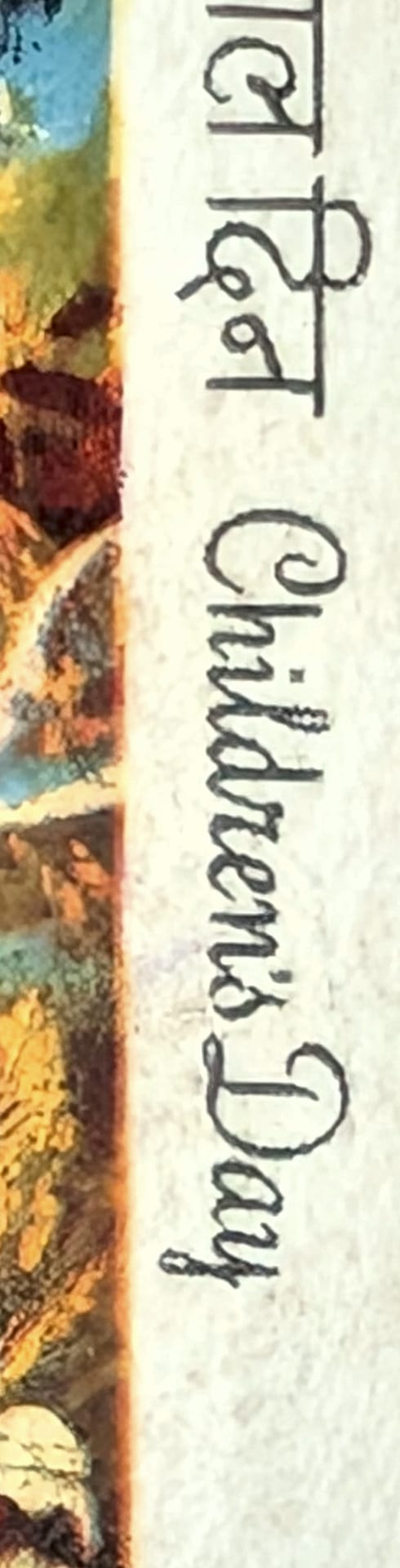
That is a real design decision, and it is the only place on the stamp where the Department of Posts allowed itself a gesture. The Hindi line above it is set in the same hand. The denomination and the country name at the foot, by contrast, are conventional serif capitals — the state’s own voice, kept in its own register, confined to the bottom band.
The second is the framing. The painting sits inside a generous white margin on all four sides and the vignette’s edges are hard and straight. The design does not pretend the artwork continues past the paper. It presents it as a picture — mounted, bordered, hung — rather than as a scene the stamp is a window onto. That is how you display something somebody made. It is not how you illustrate a subject.

The third is what the design refuses to do. There is no Children’s Day emblem, no dove, no clasped hands, no date set into the margin, no explanatory line. The only text on the whole Children’s Day stamp is the title, the denomination and the country. On an issue marking a national observance, India Post declined to commemorate anything at all. It printed the picture and got out of the way.
Set against the 1957–1966 run, that restraint is the whole argument. The early stamps explain. This one exhibits.
Series Context
The child-painted Children’s Day stamp series runs from 1971 through the 1990s, and the titles alone make a passable social history: Women at Work (1971), Children at Play (1973), Cat (1974), Cow (1975), Loyal Mongoose (1976), Cats and Friends (1977), Two Friends (1978), Girls Dancing (1980), Toyseller (1981), Mother and Child (1982), a woman and child from Festival (1983), then Herdsman and cattle in Forest (1984).
Read in order, the Children’s Day stamp run is a decade and a half of Indian childhood describing itself without being asked leading questions. Animals outnumber adults. Nobody paints a hospital.
The following year the pattern broke. The 1985 Children’s Day stamp shows a girl using a home computer, and no child artist is credited for it in the standard index. Whatever the reason, the state had picked up the pencil again — and it went straight back to showing a child being equipped for the future, which is precisely what the series had been doing before 1971.
Closing
Somewhere in India in 1984 a schoolchild was handed a national platform and used it to paint a tree with birds in it. An initial and a surname survive on a philatelic index; nothing else does. The forest does. Printed at 50 paise on cream paper, thick with white birds nobody has ever confidently identified, issued into the worst fortnight the country had had in years, and completely indifferent to all of it.
Further Reading & Links
On StampTales
- The 1983 Children’s Day stamp — a child given free choice painted an adult.
- The 1986 Children’s Day stamp — a child’s rock climber, two ropes tied to nothing.
- The 1984 President’s Review of the Fleet stamp — another issue from the same year, and the opposite instinct entirely: the state at maximum ceremony.
- The Gandhi stamp of 1994 — what India Post does when it is trying to commemorate a person.
- The 1989 stamp for 75 years of Indian cinema — another issue built on artwork India Post borrowed rather than commissioned.
- The 1990 Charminar stamp — a stamp that leaves out considerably more than it shows.
External references
- List of postage stamps of India, 1981–1990 — Wikipedia) — issue dates and denominations across the decade.
- Children’s Day (India) — Wikipedia) — background on the observance and the 1957 first issue.
- Children’s Day stamps of India — Indiapicks thematic index — the SG-numbered list of painting titles and child artists used throughout this article.
3 Comments
Comments are closed.