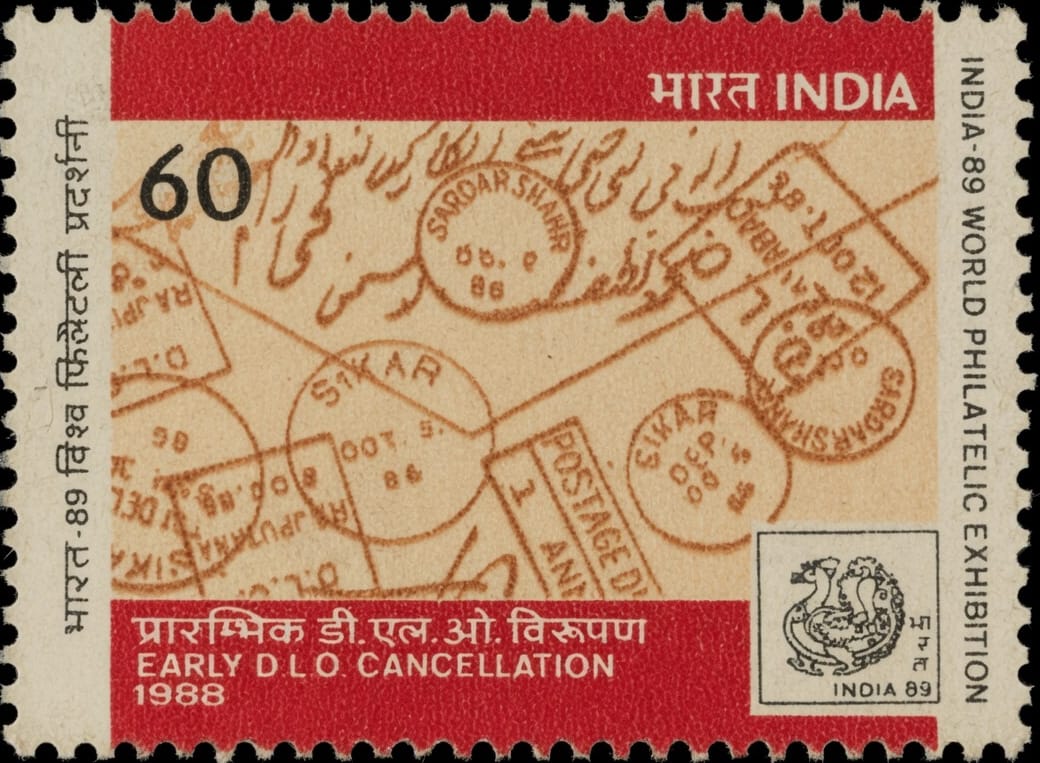
World Philatelic Exhibition 1989 Stamp: India Sent Its Mail to an Exhibition
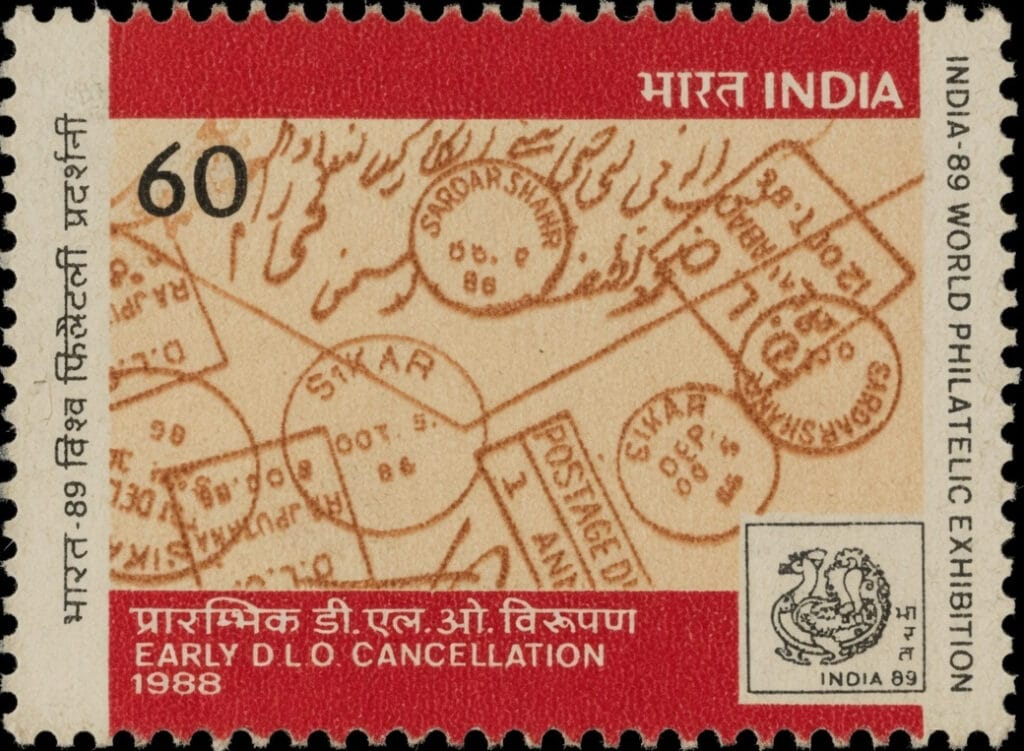
The World Philatelic Exhibition 1989 stamp is one of India’s most unusual commemorative issues.
The Stamp
| Issue | World Philatelic Exhibition 1989 |
|---|---|
| Country | India — Department of Posts |
| Subject | Postal history; philatelic exhibition |
| Issued | 1989 (exhibition year) |
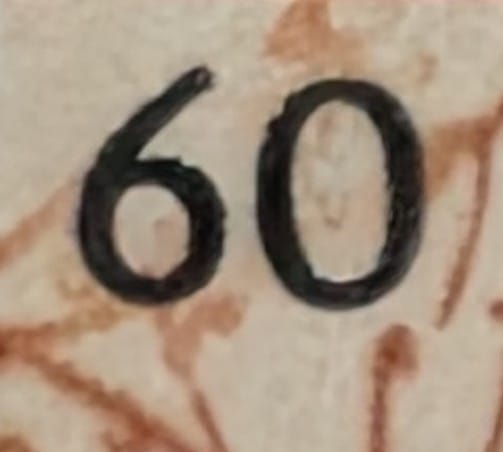
| Denomination | 60 paise |
| Occasion | World Philatelic Exhibition 1989, held in India |
| Design Feature | Early postal cancellations (D.L.O marks, 1986) |
| Size | Standard postage (perforated all edges) |
| Catalogue | SG [to be confirmed] |
| Condition of this copy | Mint, complete perforations, light aging on cream ground |
The Story
The World Philatelic Exhibition 1989 stamp is an exhibition commemorative that breaks from tradition. Many exhibition stamps celebrate people, monuments or national symbols; this one celebrates paperwork instead.
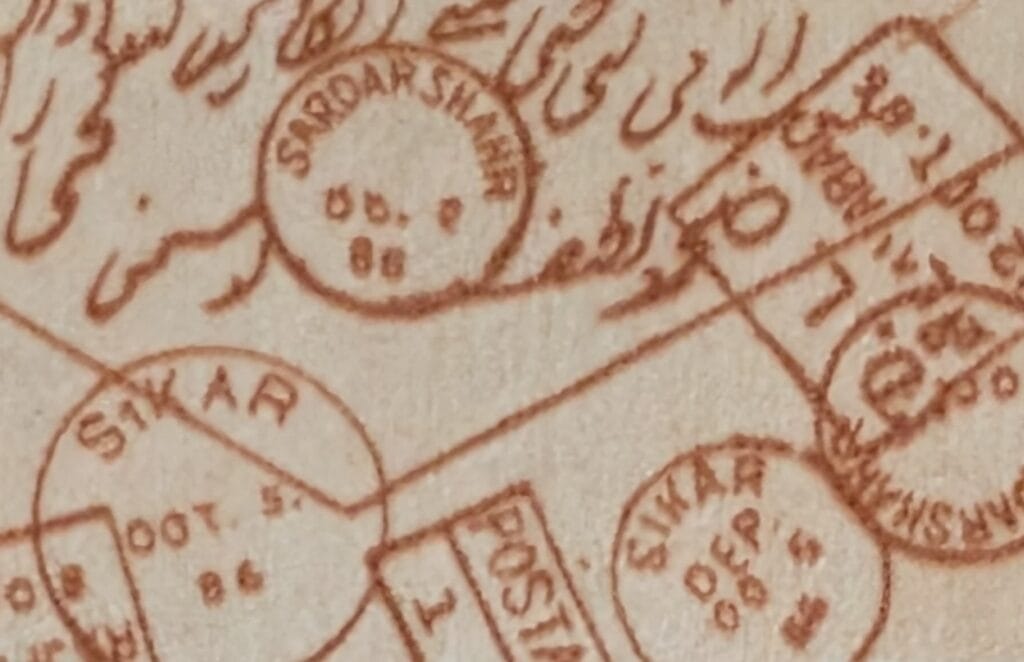
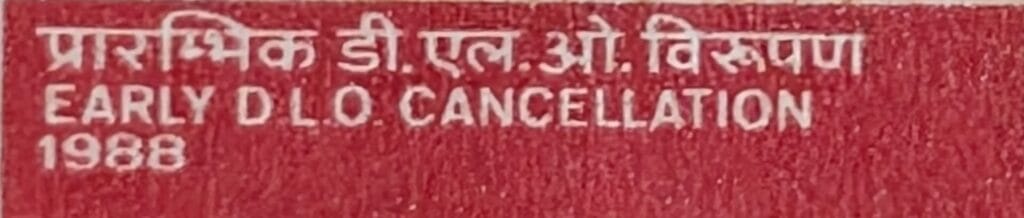
The design abandons traditional commemoration for documentary evidence. Against a cream ground, the stamp reproduces historic postal markings—overlapping cancellation marks, routing stamps, and circular D.L.O (Dead Letter Office) impressions, dated 1986. The marks are red-brown, hand-stamped, and layered. They are three years older than the exhibition itself.
Why would the World Philatelic Exhibition 1989 stamp reproduce D.L.O cancellation markings on a celebration of stamp collecting?
The Exhibition and Its Moment
Exhibitions are international gatherings where philatelists, collectors, and nations celebrate postal history and stamp design. Nations host them as opportunities to display their postal heritage and acknowledge their standing in the global philatelic community. Exhibition stamps are issued to mark the occasion.
India Post issued a commemorative stamp for the event. This World Philatelic Exhibition 1989 stamp made a specific choice: instead of depicting national monuments, cultural heritage, or the romance of mail travel, it reproduced historic postal markings—the visible traces of the postal system in operation.
What the Stamp Reproduces
The D.L.O marks on this World Philatelic Exhibition 1989 stamp are historic postal markings—a visual record of the postal system in operation. The design choice is to place postal documentation at the center of the commemorative image.
This invites the collector to look beyond traditional commemoration into the machinery that carried the mail. The design can be read as placing the exhibition’s focus on the infrastructure and documentation of postal systems. What this design choice meant to its creators, or how India Post intended it to be interpreted, is not documented and cannot be assumed.
Looking Closer at the World Philatelic Exhibition 1989 Stamp
The World Philatelic Exhibition 1989 stamp rewards magnification with details worth studying. The cancellation marks are the dominant visual element. D.L.O rubber stamps overlap in different orientations and with varying inking densities. Some impressions are crisp; others are fainter.
The ground color is a cream tone—neutral, without the brightness of modern white paper. The vibrant red-brown cancellation marks create strong contrast against this cream ground, drawing the eye to the postal markings at the stamp’s center.
The outer frame is restrained: thin lines, text in Devanagari and English, no additional ornament. The visual weight remains on the central postal markings. The simplicity of the frame suggests the design prioritizes the document over decoration.
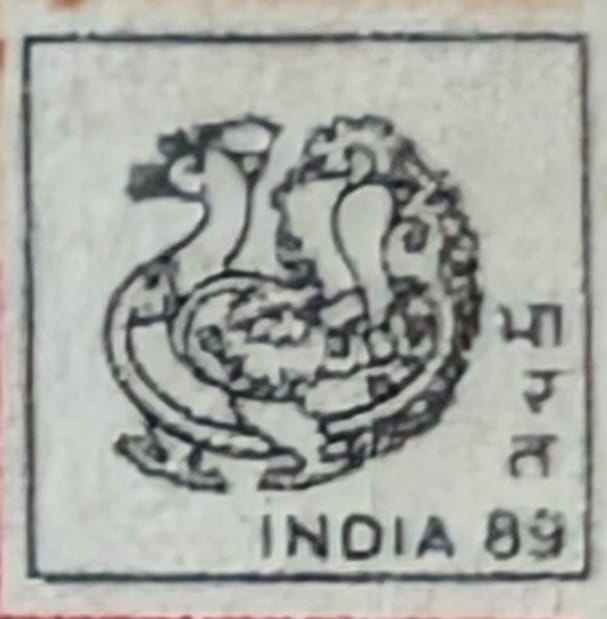
A small emblem appears in the lower right corner.
Closing
Most stamps preserve history by depicting it. The World Philatelic Exhibition 1989 stamp preserves history by reproducing the marks history leaves behind. Long after the exhibition closed, those cancellations remain—not as decoration, but as reminders that every journey through the postal system leaves a record behind.
Further Reading & Links
The World Philatelic Exhibition 1989 stamp represents a distinctive approach to exhibition commemoration—one that invites collectors to examine postal infrastructure rather than celebrating institutional achievement.
On StampTales
- The Society Took Ten Years to Admit an Indian. The Philatelic Society Stamp Never Says So. — Another stamp celebrating Indian stamp-collecting institutions.
- https://stamptales.in/stamp-collecting-1989-india-philatelic-exhibition — “Stamp Collecting 1989”: the other stamp from this same INDIA-89 set — where this page shows the postal system’s paper trail, that one shows the child chasing it.
- https://stamptales.in/1989-indian-cinema-stamp/ — 1989 Indian Cinema stamp: what happens when a postal service is asked to compress seventy-five years into four centimetres.
External sources
- World Philatelic Exhibition 1989 — Official records — Catalogue and exhibition history (verify access and reliability before linking)
- Dead Letter Office — India Post history — Institutional archives on postal operations
- Philatelic Exhibition Commemorations — Smithsonian Collections — Comparative context on how exhibitions are commemorated in postage




2 Comments
Comments are closed.