The Owl That Fought Sixteen Years to Stay on the Crest
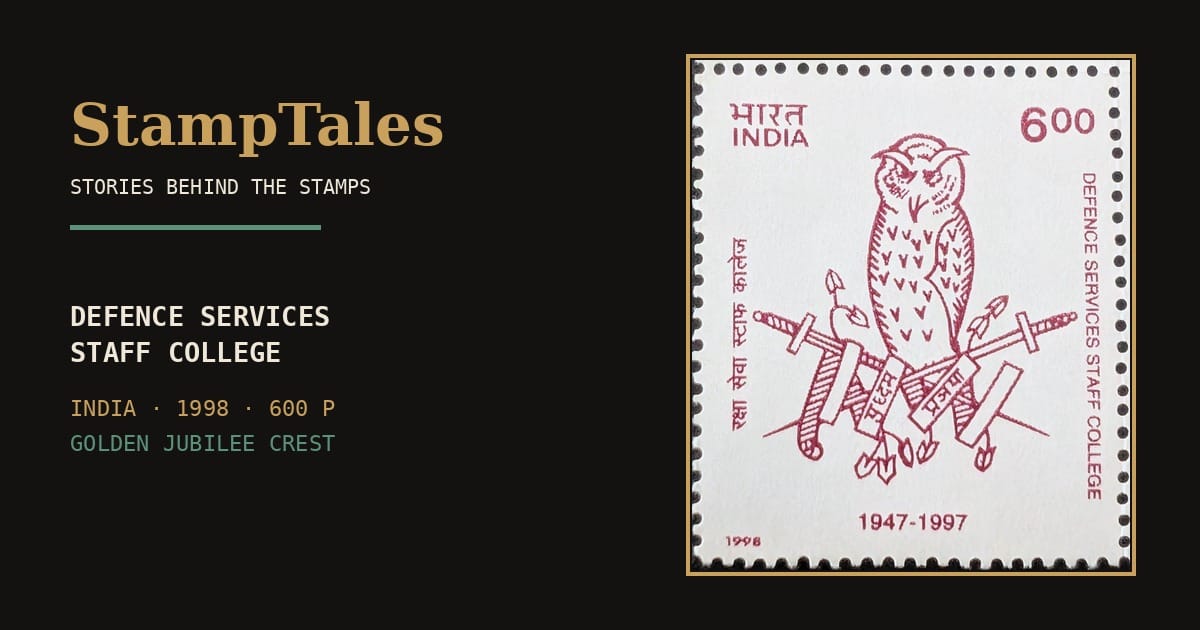
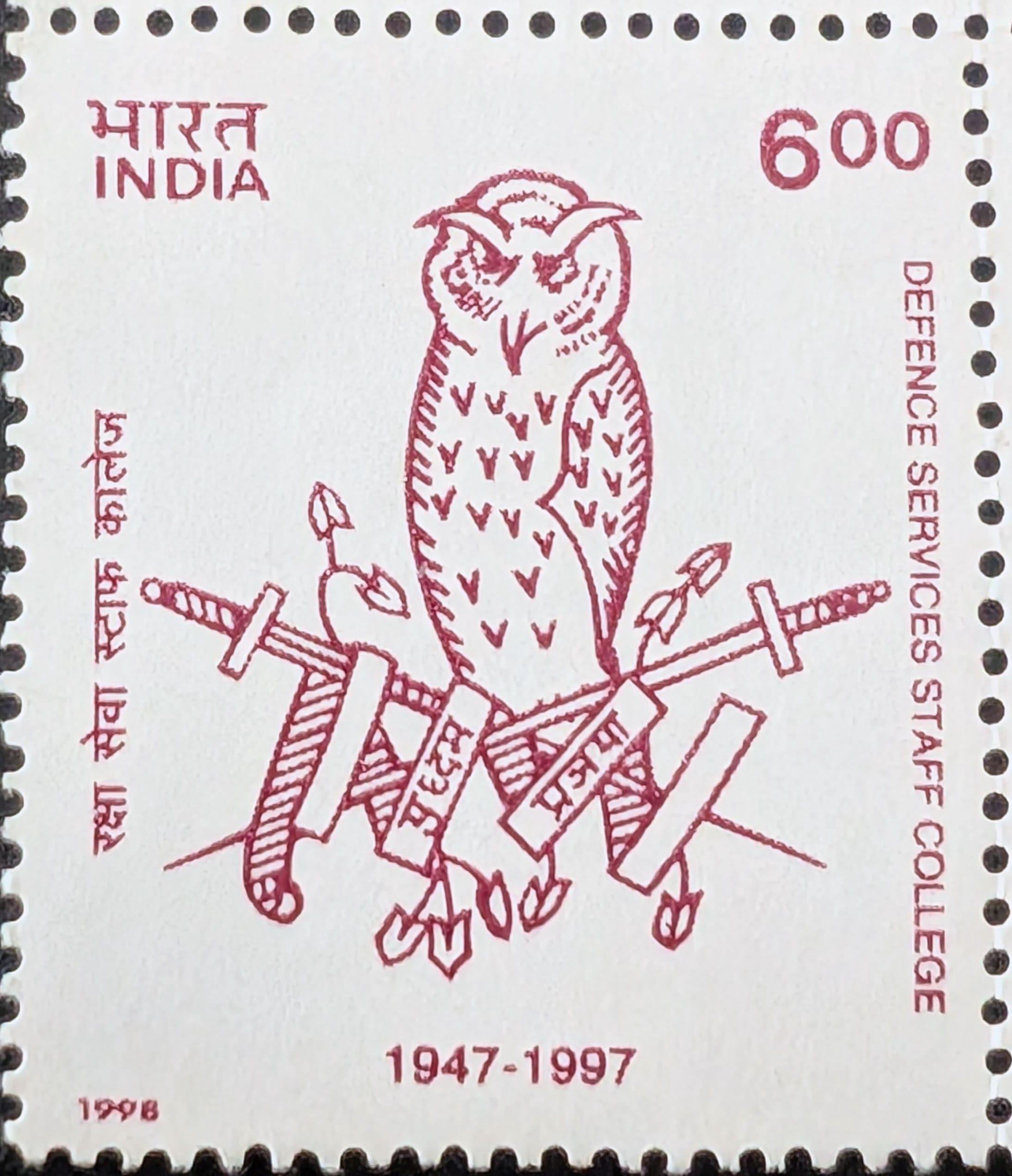
An owl is not what you would choose to put on a soldier’s badge in India. In much of the country the bird is an omen of death, and ullu is the everyday word for a fool. Yet in 1998 the Department of Posts printed one at the centre of a commemorative stamp for the Defence Services Staff College, perched on crossed swords, its eyes half shut. The bird had earned its place there. It had spent sixteen years fighting to keep it.
The Stamp
| Issued | 16 April 1998, India Post |
|---|---|
| Occasion | Golden Jubilee (1947–1997), Defence Services Staff College, Wellington |
| Denomination | 600 paise |
| Design | The college crest — an owl on crossed swords with the Sanskrit motto Yuddham Pragya |
| Printing | Photogravure, single colour, India Security Press, Nashik |
| Quantity | 0.7 million |
How the Defence Services Staff College walked out of Pakistan
The institution on the stamp was not built in 1947. It was carried across a new border.
The Staff College at Quetta, founded in 1905 at Deolali and moved to Quetta two years later, had trained officers of the British Indian Army for four decades. When the subcontinent was partitioned in August 1947, the building and its grounds fell inside Pakistan. Pakistan kept the campus. India kept the people.
The senior-most Indian instructor, Colonel S. D. Verma, led the Indian element out. Promoted to brigadier and made the first commandant, he chose Wellington, a cantonment in the Nilgiri hills of the south, as the new home. The first course opened there in April 1948 with forty-six army officers and two each from the navy and air force. Two men from that opening batch would go on to head their own services. The college that had been an inheritance became, within a few years, something India built for itself: the air wing in 1949, the naval wing in 1950, and a new name to hold all three – the Defence Services Staff College.
The stamp is one of a long run India Post has given to the armed forces and their institutions, from the airborne gunners of 9 Parachute Field Regiment to the fleets reviewed at sea.
The stamp marks the fifty years from 1947 to 1997. What it actually shows is older than the college, older than the country, and for a while it was not officially allowed to be there at all.
The bird nobody in Delhi wanted
When Verma set up the new college, he did the natural thing: he took Quetta’s crest with him. The owl on crossed swords, with the Latin motto Tam Marte Quam Minerva – as much by Mars as by Minerva, war balanced against wisdom. Quetta had taken it from the Staff College at Camberley in England, which had used the wise owl for generations. Half the staff colleges of the old empire flew the same bird. Camberley, Quetta, Kingston in Canada, Queenscliff in Australia – all owls.
Army Headquarters in Delhi turned it down.
The crest was rejected as inappropriate and ill-omened, and the college was told to produce a new one with a Hindi motto. This was not bureaucratic fussiness. It was a reading of the bird that most Indians would have recognised: the owl as a creature of graveyards and bad news, not a fit emblem for a national military institution in a country that had just won its independence from the people who chose it in the first place.
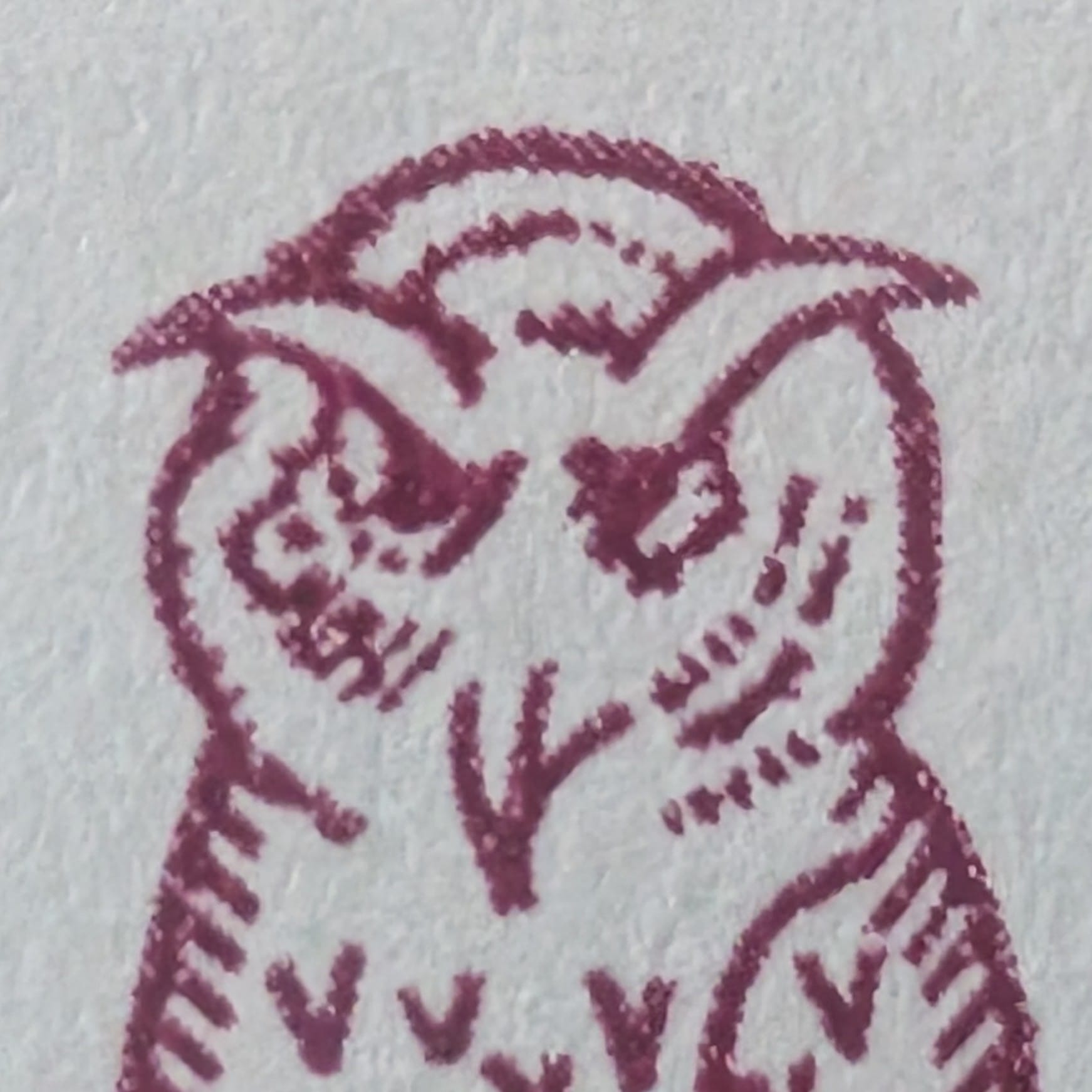
Verma argued for the owl. He offered two or three mottos in Hindi as a compromise but would not give up the bird. A falcon was floated as the replacement – a properly martial creature, no folklore problem. General Lentaigne had a drawing of a falcon copied from a bird book and sent up to Delhi. The falcon lost.
Then the designs got stranger. A professor from the Mayo School of Art in Lahore was commissioned to produce something acceptable; his owl came out looking like a parrot. Another proposal buried the bird entirely under a banyan tree, an anchor, crossed swords, Ashoka lions and a wreath of lotus leaves, painted in seven colours. None of it stuck.
Through all of this the college simply kept using the owl. Unapproved, unofficial, it sat on the crest anyway – with, as the college’s own history puts it, the status of an alien diplomat without his proper credentials.
The settlement in Sanskrit
The owl won in 1964. The Chiefs of Staff approved the bird on crossed swords against a maroon ground, and blessed a new motto: Yuddham Pragya, Sanskrit for “to war with wisdom.” Sixteen years after Verma carried it across the border, the crest was finally the college’s own.
Look at what the settlement actually was. The English kept losing the argument; the falcon kept losing to the owl. What changed was the language. The Latin came off and the Sanskrit went on, and the bird that had been borrowed from Camberley was suddenly Indian. The owl did not have to become a falcon. It had to stop speaking Latin.
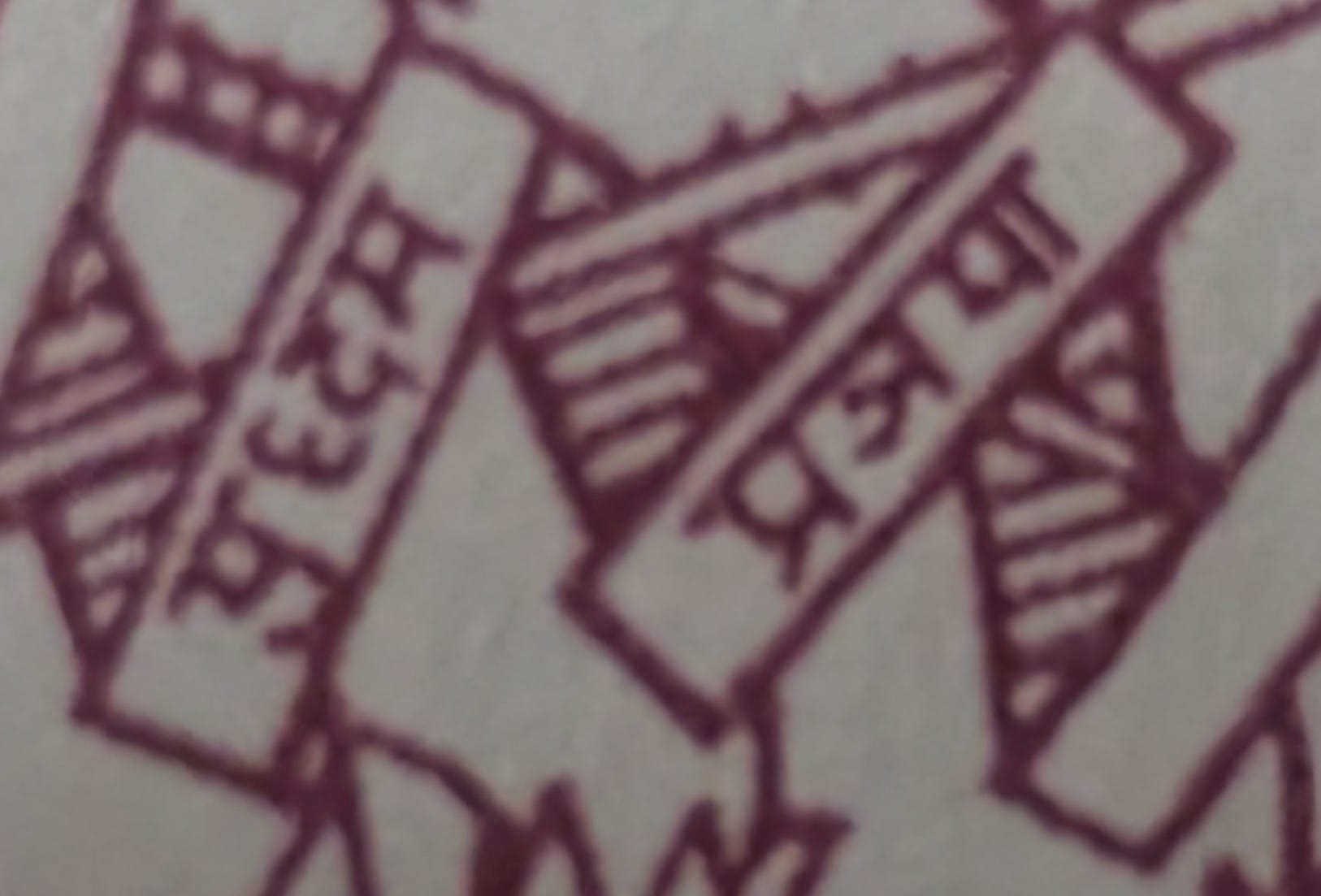
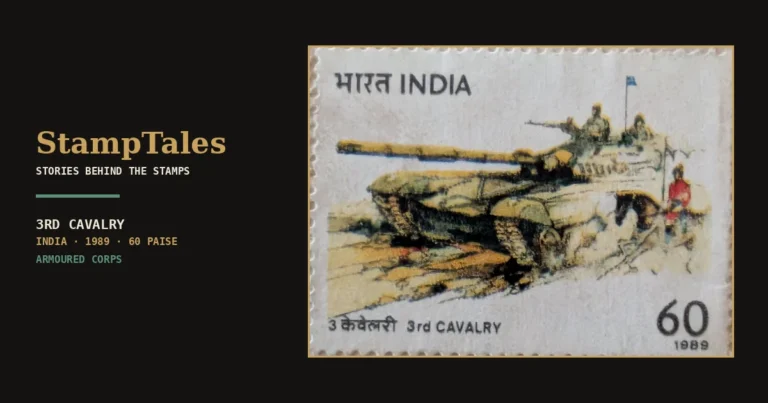
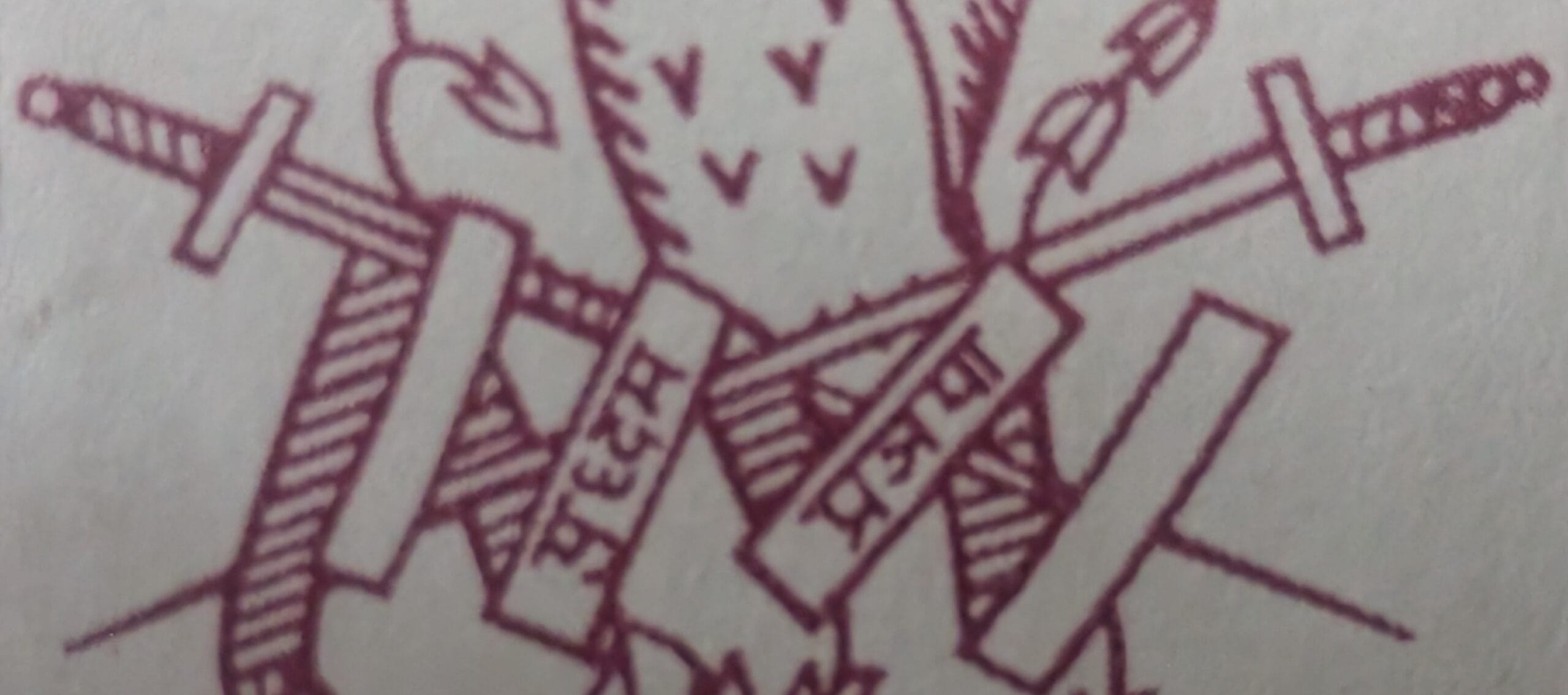
That is the whole crest on the stamp, reproduced in line as the college itself designed it. The swords are the emblem of Mars, the Roman god of war. The owl is the bird of Minerva, goddess of wisdom. That pairing came from Camberley and before that from Rome, and it survived partition, rejection, a falcon, a parrot and a banyan tree to end up on an Indian postage stamp in 1998, still saying the same thing in a third language. Indian military heraldry is full of these inheritances that outlive their origins – our article on the 3rd Cavalry and the horse it could not give up tracks the same instinct in a different regiment.
What the Defence Services Staff College stamp really commemorates
Fifty years is the official occasion. The crest is the real subject, and it makes an unusually honest argument for a government stamp. Institutions like to present their symbols as settled and inevitable, as if they had always been the obvious choice. This one was neither. It was contested for sixteen years by the very army that now claims it, kept on the crest by a first commandant who would not give up the bird, and legitimised only by translating its motto out of the coloniser’s Latin.
It is a rare thing for a commemorative issue to sit on a symbol with this much argument behind it – most, like the ceremonial pageantry of the President’s Fleet Review, show the institution at its most settled, not its most contested.
The owl on the stamp is not fierce. Its eyes are hooded, almost shut – less a bird of prey than something that has waited a long time and is in no hurry now. It waited sixteen years for permission to sit where it had been sitting all along.
Further Reading & Links
- Defence Services Staff College, “The Owl” – the college’s own account of the sixteen-year fight over the crest.
- Wikipedia, “Defence Services Staff College” – founding, move from Quetta, and the 1964 adoption of the owl and Sanskrit motto.
- Wikipedia, “Command and Staff College, Quetta” – the sister institution that kept the campus and later changed its own symbol.