India celebrated 125 years of a police system born after 1857
Anniversaries do arithmetic for you. Put “125th” on a stamp in 1986 and you have quietly published a date: 1861. India Post almost certainly meant the number as a round, celebratory figure — a birthday. But the birthday it lands on is the year the British passed the Police Act of 1861, and the reason they passed it is not a thing a republic usually prints on stamps.
The road to the Police Act 1861 ran through 1857..
The India Post brochure that accompanied this issue says as much, in its own careful language. After what it calls “the first Independence war of 1857,” it explains, the Government of India appointed a Commission in 1860 to improve the efficiency of the police, and the Indian Police legally came into being in 1861. Read that twice. The government’s own text, printed to honour the force, traces the force’s birth straight back to the rebellion — and then files the whole thing under “efficiency.”
Historians have never been so gentle. Its purpose, the standard verdict runs, was not the modern democratic idea of public policing; it was to build a disciplined force loyal to the colonial administration and capable of suppressing unrest. The Supreme Court would later put it more bluntly still, but the 1861 drafters were plain enough about it themselves.
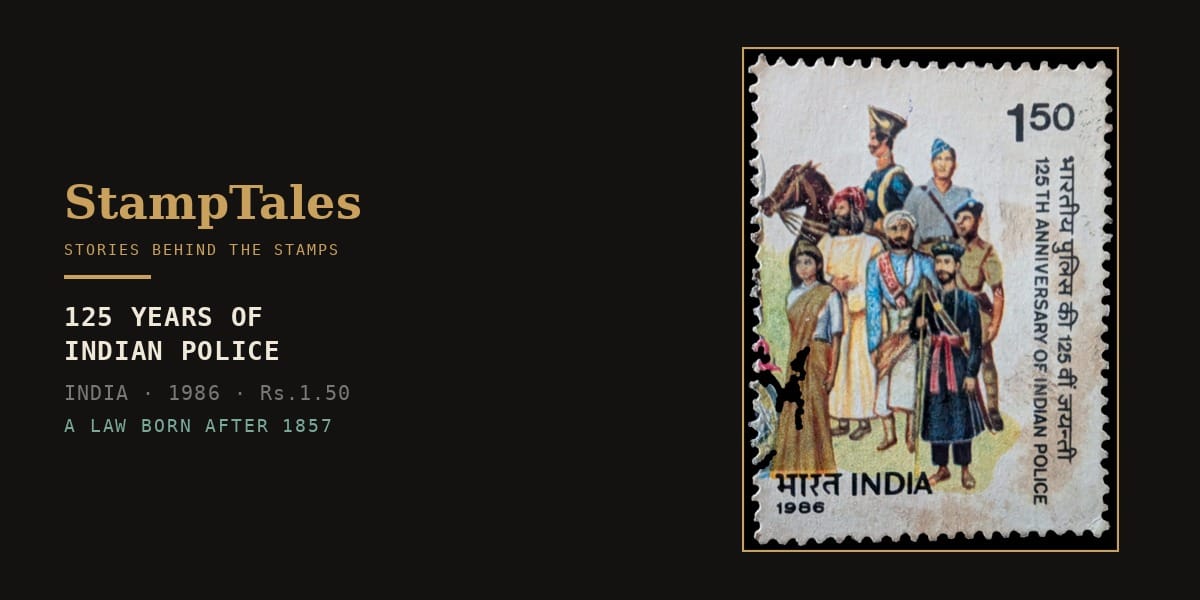
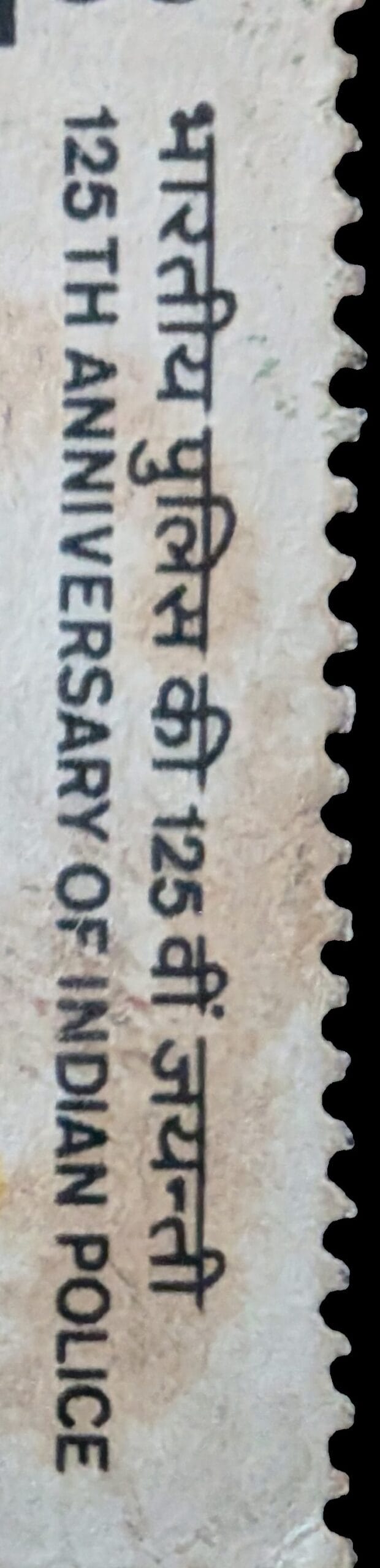
| Issue | 125th Anniversary of Indian Police |
|---|---|
| Issued | 1986 |
| Denomination | ₹1.50 |
| Country | India |
| Printer | India Security Press, Nashik |
| Process | Photogravure, multicolour |
What the picture is doing
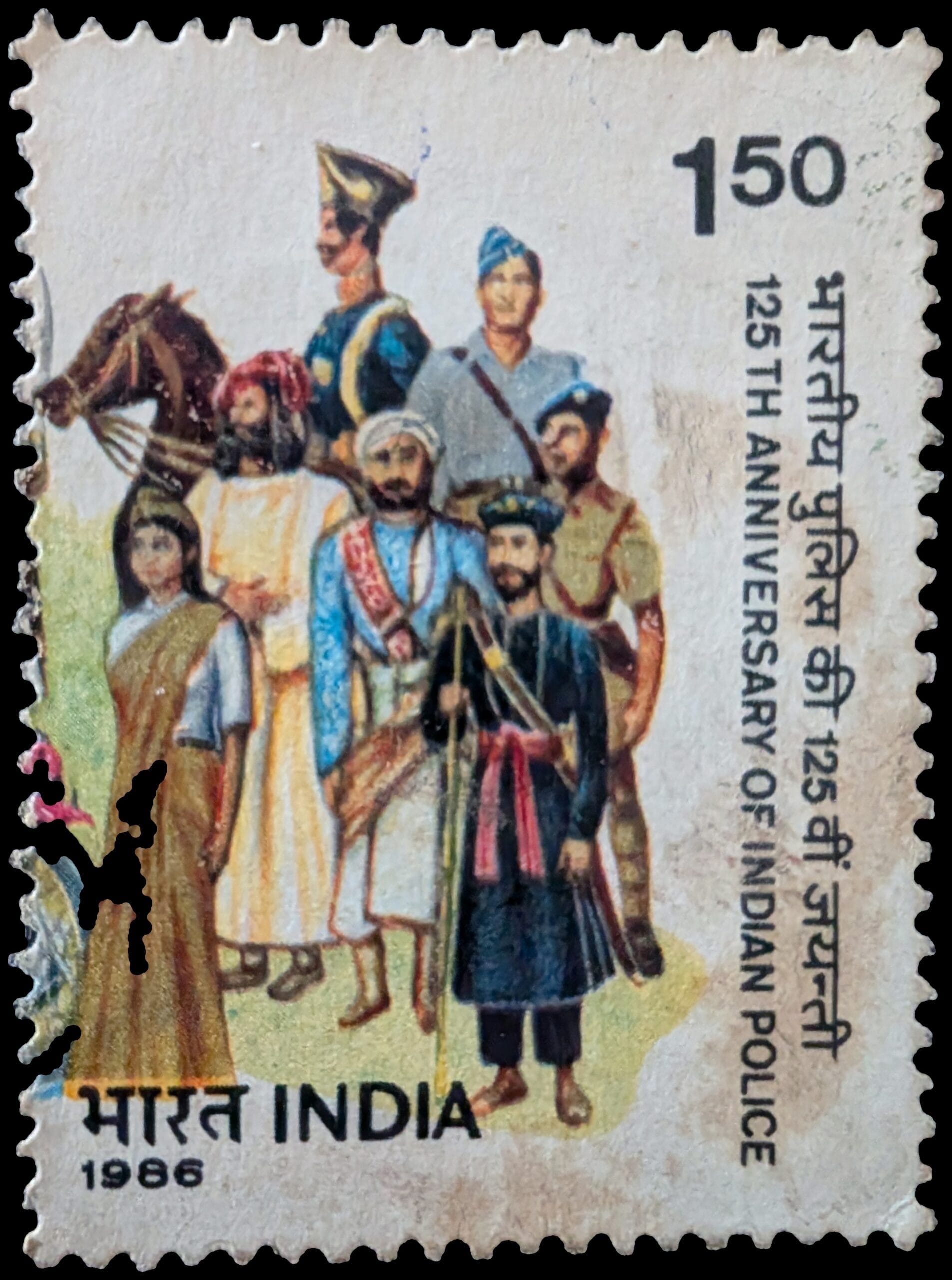
The stamp does not show any of this. It shows a crowd.
A cluster of figures stands grouped together in a range of period and regional dress — a plumed ceremonial helmet at the back, turbans, a sashed coat, khaki drill, and a woman in a sari at the front. The individual roles and eras are not labelled, and the point does not depend on naming them. What the composition plainly intends is a pageant of many uniforms across time — “the many faces of Indian policing.” Variety stands in for continuity. Look how far we have come, the picture says; look how many kinds of us wear the uniform now — the same instinct for self-presentation that runs through India Post’s other state-message stamps of the period.
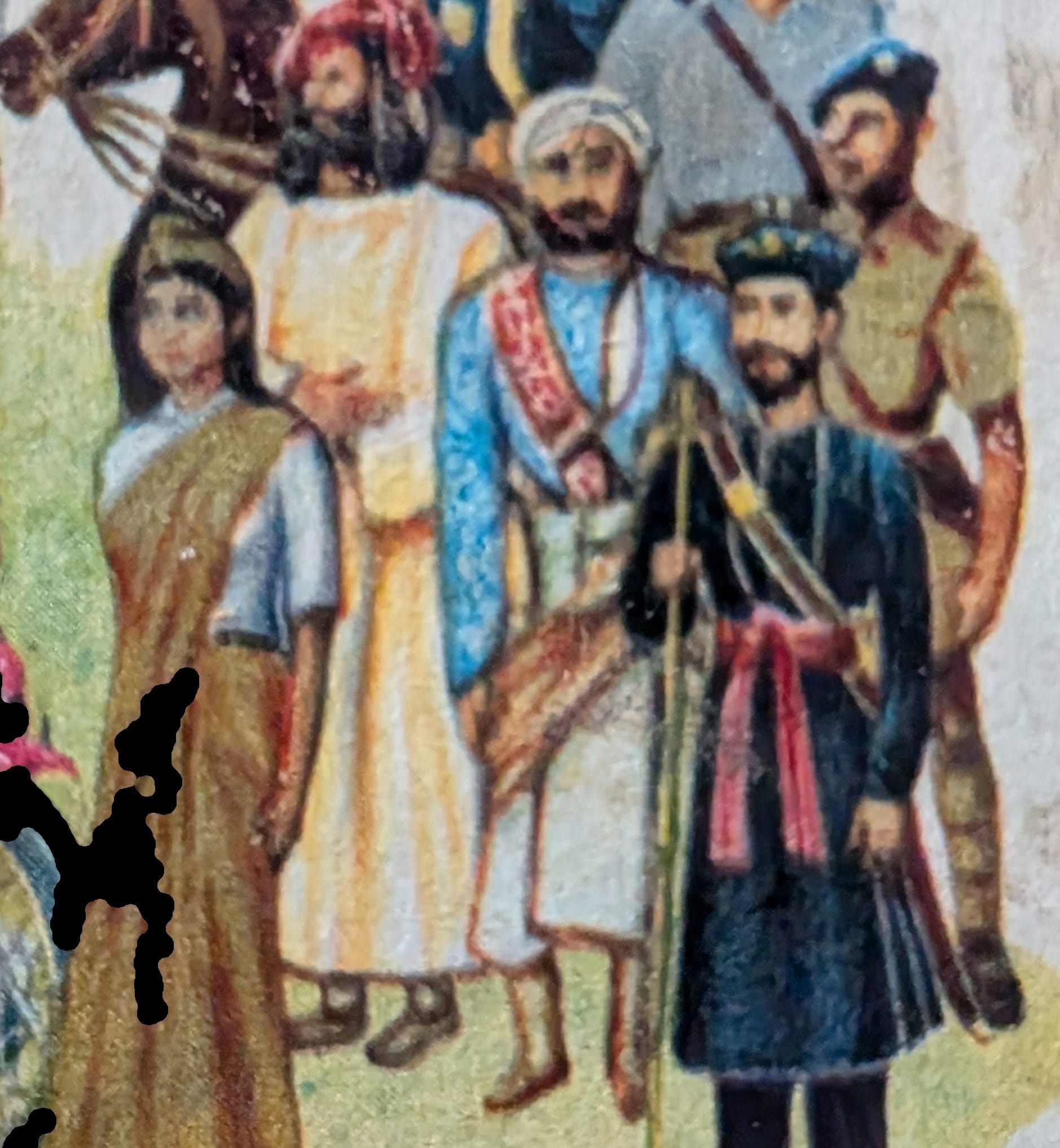
But a line-up of uniforms is a telling thing to put on this particular anniversary, because the uniform is the part of the story that genuinely did change. The cloth changed; the faces changed; by 1986 a woman stood in the frame. What did not change was the Act underneath the cloth — the 1861 framework that still sits beneath much of Indian policing. The stamp celebrates the surface that moved and stays silent about the frame that did not.
The Police Act 1861 never moved
The Police Act of 1861 was not repealed at Independence. It was not repealed in 1986, when this stamp went to press. It has still not been repealed in most of India today.
In 2006 — twenty years after the anniversary — the Supreme Court, in Prakash Singh v. Union of India, directed the states to implement a set of binding reforms intended to free policing from political control. Most states have complied only cosmetically; a separate committee’s Model Police Act, drafted the same year to replace the 1861 framework, has been adopted in full almost nowhere. The colonial-era structure survived into independent India, survived this stamp, and — with amendments — is still the law under which much of the country is policed in the year you are reading this.
So the stamp presents 1861 as a beginning — a proud “125 years of organised policing,” a milestone to salute. But it was not a beginning that ended. The institution it marked had never really left; it had only changed its cloth.
Why 1857 keeps the receipt
There is one more turn, and it is the sharpest. The brochure calls 1857 “the first Independence war.” That phrasing is the post-colonial republic’s own: to independent India, the men and women of 1857 are freedom fighters, the earliest of the martyrs in a struggle India Post would spend decades commemorating. The same event has two names because it had two sides — mutiny to the crown, first war of independence to the nation that came after.
Which means the police force this stamp salutes was created by one side of 1857 specifically to defeat the other. The institution born to crush the “first war of independence” is here being honoured, with a commemorative stamp and a ₹1.50 denomination, by the independent republic that inherited it. And the whole loop sits in plain sight in the government’s own text: the brochure lays every fact of it out — the rebellion, the commission, the Act — and then, at the end of the sentence, reaches for the word “efficiency.”
Further Reading & Links
- Police Act, 1861 (India Code) — the founding statute, enacted 16 March 1861 in the aftermath of the 1857 rebellion.
- 125th Anniversary of Indian Police — issue and brochure text (Indian Philatelics) — the India Post brochure tracing the force’s origin to 1857 and 1861.
- The Indian Imperial Police and the 1857 motive (Wikipedia) — the colonial force established after the rebellion under the 1858 and 1861 Acts.