The word that made the declaration universal
A universal declaration came within one word of saying men. It says human beings because of Hansa Mehta — and in 1998 India put the anniversary on a stamp, released pointedly on Women’s Day.
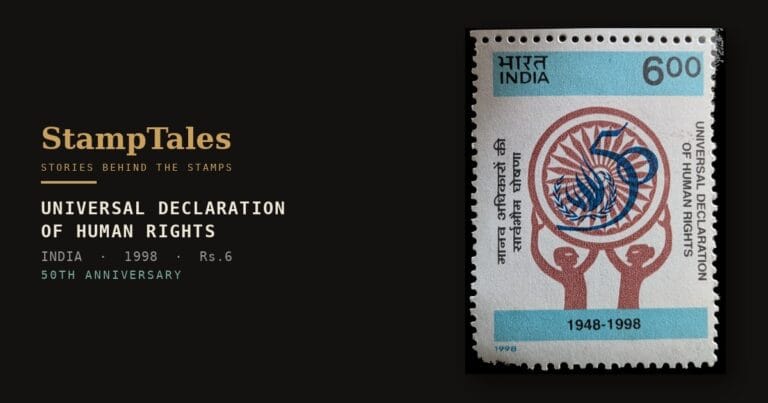
A universal declaration came within one word of saying men. It says human beings because of Hansa Mehta — and in 1998 India put the anniversary on a stamp, released pointedly on Women’s Day.
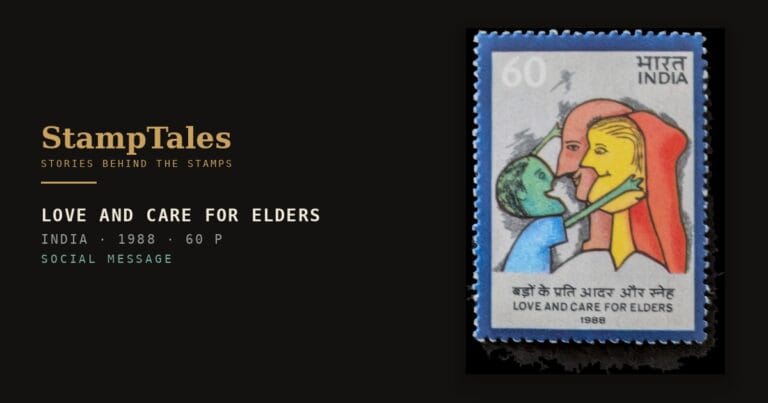
A 1988 Indian stamp where the denomination was the message — 60 paise for the age of 60, nearly two decades before the sentiment became law.
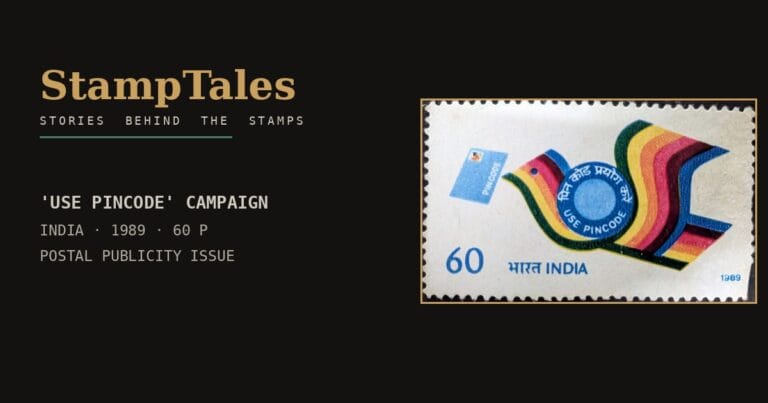
Seventeen years after India built its six-digit sorting system, the Post Office was still urging the public to write it down. In 1989 that reminder became a stamp.
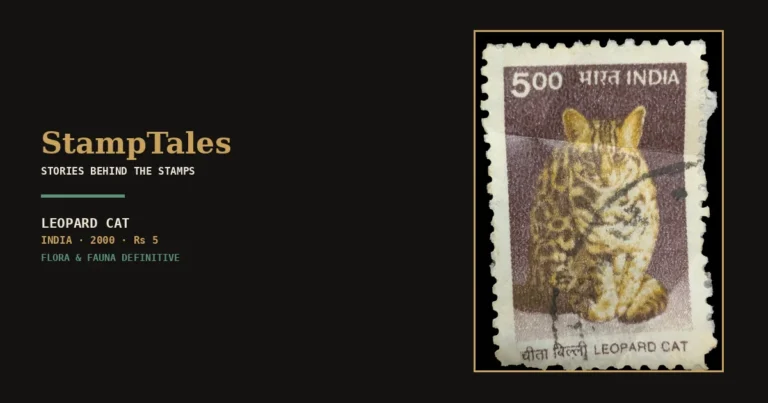
Not a leopard, not a cub – the small wild cat on this five-rupee definitive is the wild ancestor of the Bengal, the house cat bred to look wild.
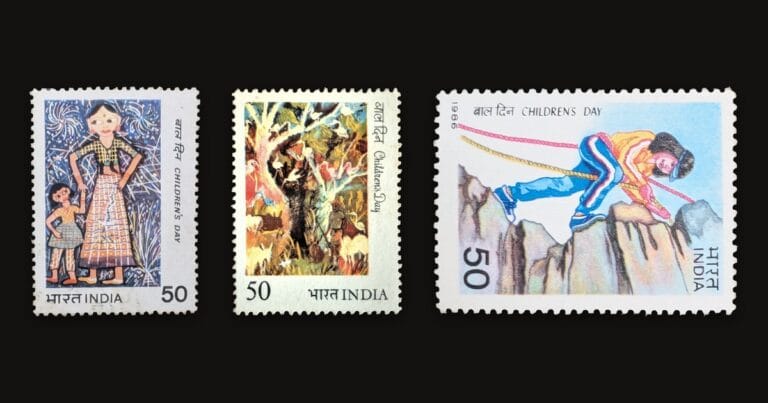
Three years running, India Post handed a stamp to a child. Each time the child painted something the occasion never asked for.
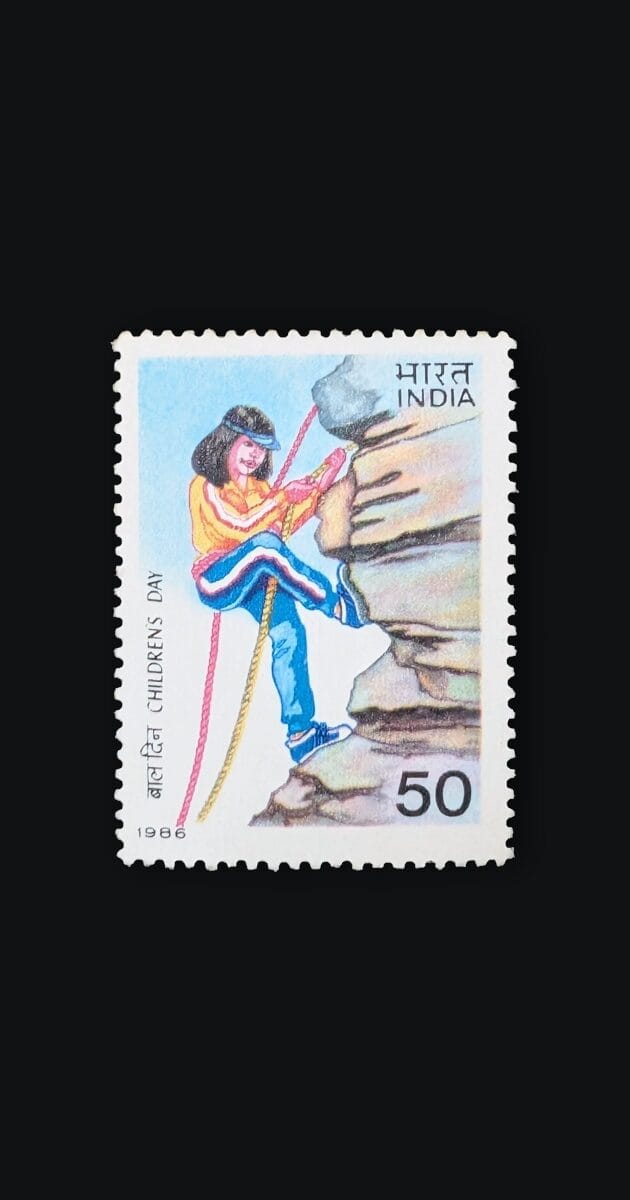
Two ropes cross this stamp and neither is tied to anything. The catalogue calls the picture “Girl Rock Climber.” The stamp never says so.
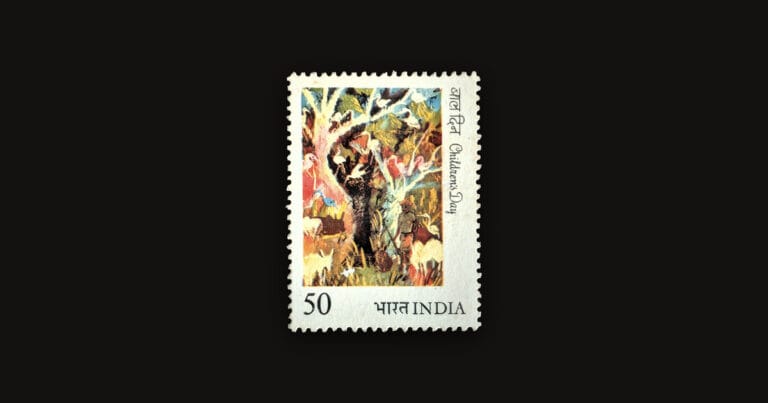
India Post handed a schoolchild a national stamp and asked for Children’s Day. He painted a tree full of birds, a herdsman, and not a single child.
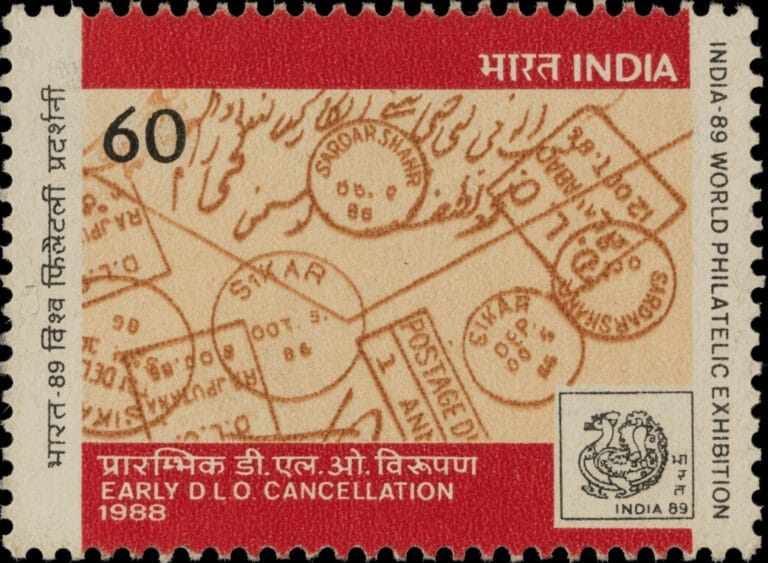
Most stamps preserve history by depicting it. This one preserves history by reproducing the marks history leaves behind. The 1989 World Philatelic Exhibition stamp turned postal markings into the central image of a celebration.
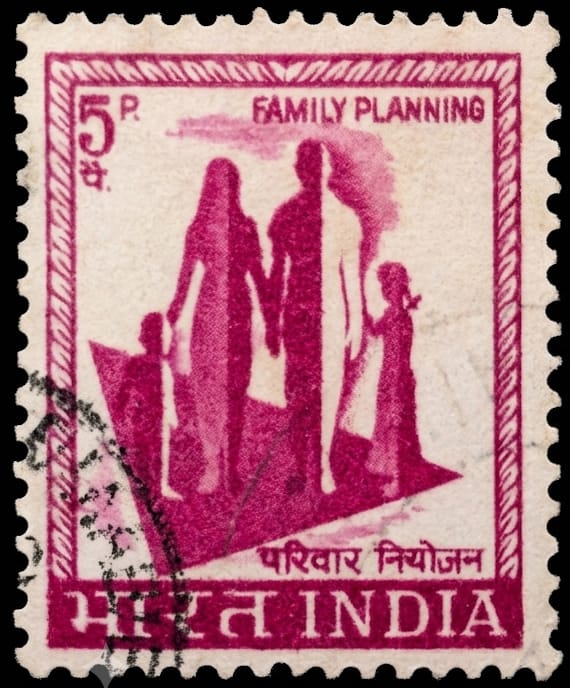
Across three decades and three definitive series, India Post printed its population policy onto the cheapest stamps in circulation. Then, one issue at a time, it stopped saying what it meant.
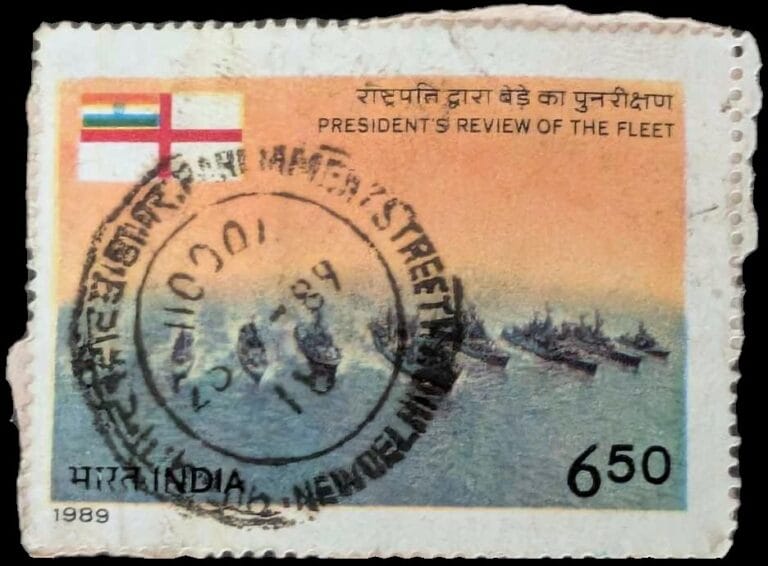
In 1989, India Post put a submarine at the center of a naval triumph stamp – one the Navy didn’t actually own, and had already agreed to hand back.