The year India called people a resource
A 1994 Indian stamp printed the words human resource development in two scripts — nine years after India renamed a ministry with them, and twenty-six before it changed the name back.
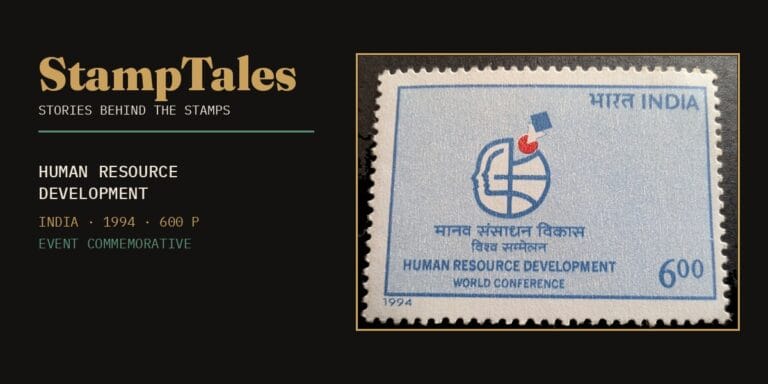
A 1994 Indian stamp printed the words human resource development in two scripts — nine years after India renamed a ministry with them, and twenty-six before it changed the name back.
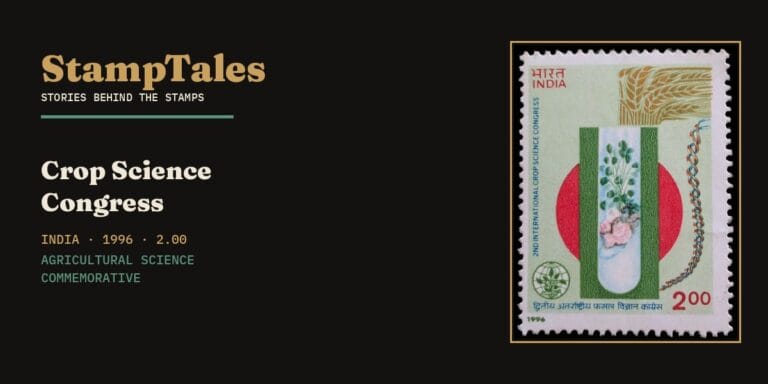
A 1996 Indian stamp that packs a century of plant breeding into one frame — and stays silent on the question its DNA helix had just made urgent: can a plant be owned?
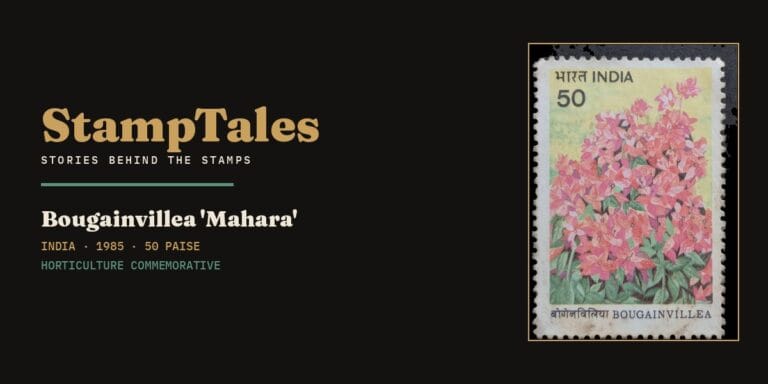
A 1985 Indian stamp that looks like a bunch of pretty flowers is in fact a portrait of one named, registered cultivar — nature given a pedigree and a place in a list.
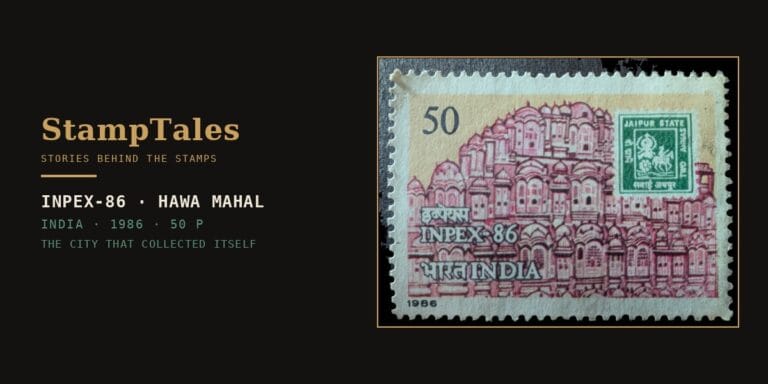
A 1986 Indian stamp for a stamp exhibition in Jaipur that framed the city’s own past — the Hawa Mahal in red, and a former kingdom’s Sun’s Chariot stamp tucked in the corner.
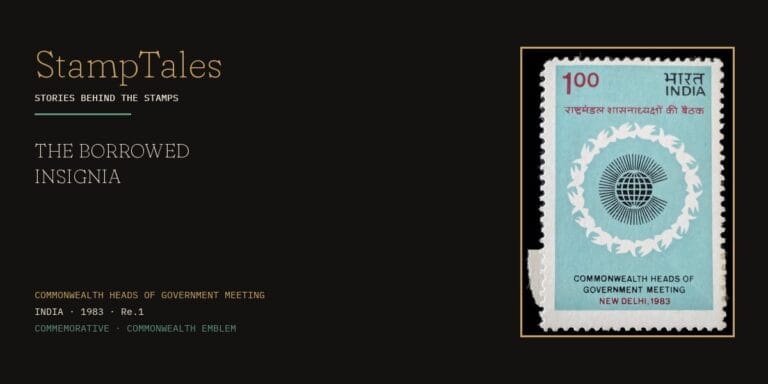
India hosted the Commonwealth in New Delhi in 1983 and printed a stamp with no lion, no flag, no map — only the club’s own borrowed insignia, issued under a scheme the members had agreed together.
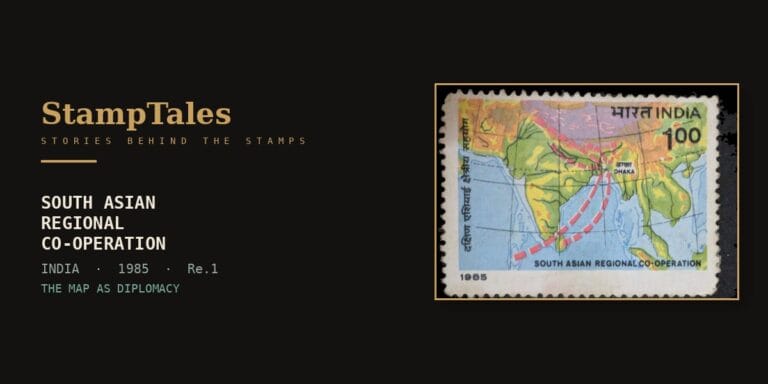
A 1985 Indian stamp that pictured seven feuding neighbours as one physical landscape, drew every dashed route to Dhaka, and still carried the movement’s older name as the Dhaka summit turned that movement into the organisation now known as SAARC.
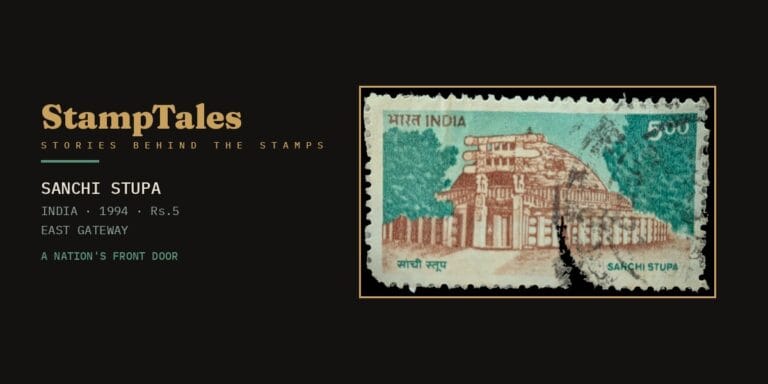
When independent India introduced its first definitive stamps in 1949, it chose monuments over leaders — among them Sanchi. The site returned on this 1994 definitive and on the 200-rupee note of 2017.
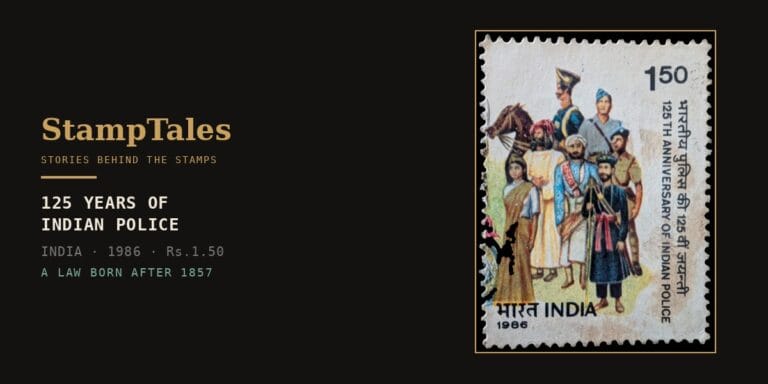
A 1986 stamp counts 125 years of Indian policing back to 1861 — the colonial law, written in the wake of 1857, that independent India never stopped using.
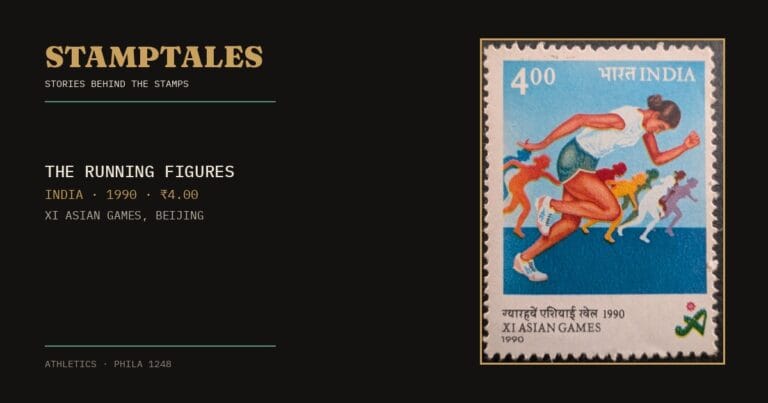
A 1990 Indian stamp for the Beijing Asian Games strips sport of flags, uniforms and nationality — then puts China’s Great Wall in the corner.
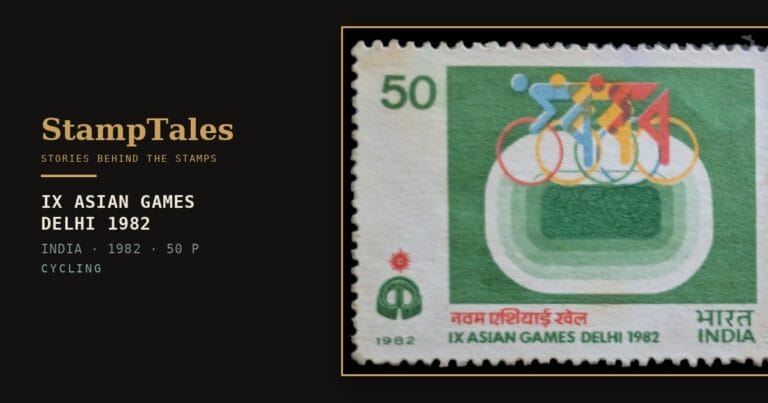
A 1982 Indian stamp that put three cyclists under the rising-sun rings of the Asian Games Federation — a body that had ceased to exist three days before the Games began.