The runners with no country
A 1990 Indian stamp for the Beijing Asian Games strips sport of flags, uniforms and nationality — then puts China’s Great Wall in the corner.
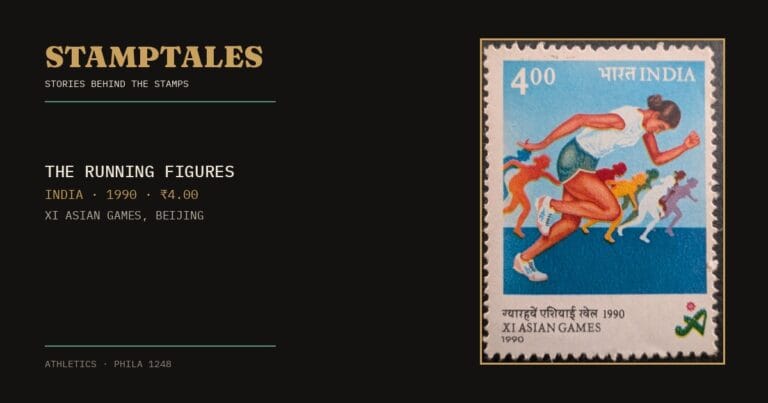
A 1990 Indian stamp for the Beijing Asian Games strips sport of flags, uniforms and nationality — then puts China’s Great Wall in the corner.
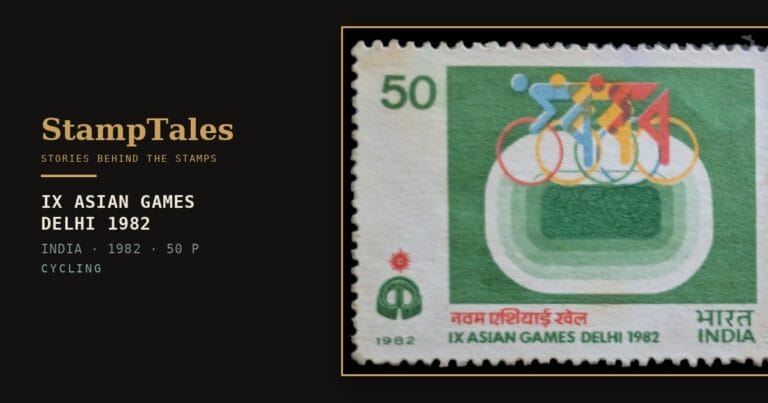
A 1982 Indian stamp that put three cyclists under the rising-sun rings of the Asian Games Federation — a body that had ceased to exist three days before the Games began.
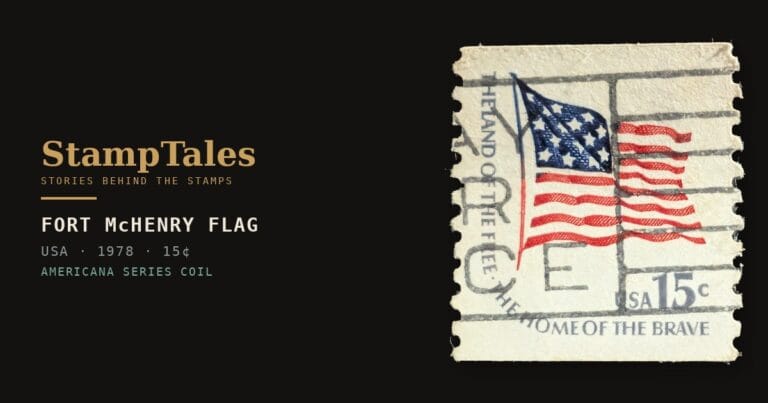
A 15-cent workhorse carrying the anthem’s closing line — issued, in this copy, as the one coil format that comes off the roll alone and never completes the four-stamp frame.

A universal declaration came within one word of saying men. It says human beings because of Hansa Mehta — and in 1998 India put the anniversary on a stamp, released pointedly on Women’s Day.

A 1988 Indian stamp where the denomination was the message — 60 paise for the age of 60, nearly two decades before the sentiment became law.

Seventeen years after India built its six-digit sorting system, the Post Office was still urging the public to write it down. In 1989 that reminder became a stamp.
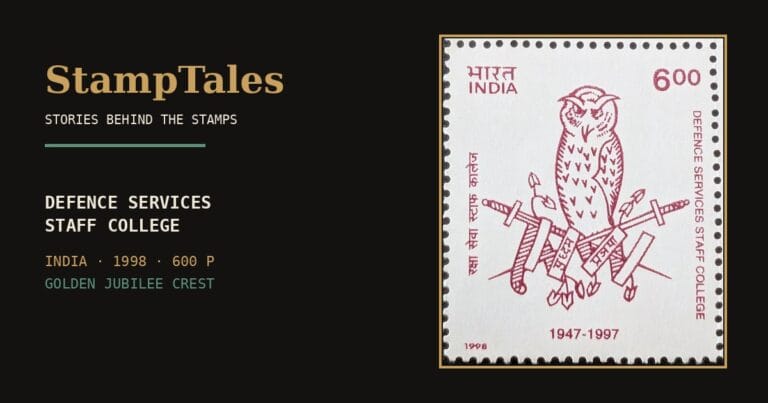
When India’s premier staff college kept the owl it inherited from a British crest, Army Headquarters rejected it as ill-omened and asked for a falcon. The bird won anyway – but it took sixteen years.
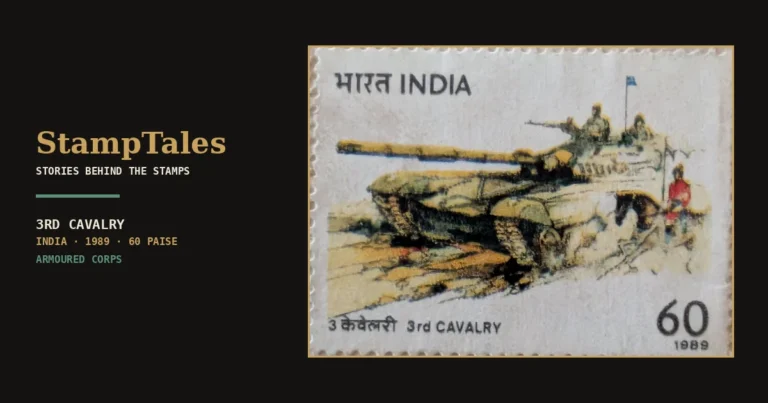
A 1989 stamp of India’s 3rd Cavalry shows a main battle tank in full detail – and, standing quietly beside it, a horse. That horse is not decoration. It is an argument about what a cavalry regiment becomes when the cavalry is gone.
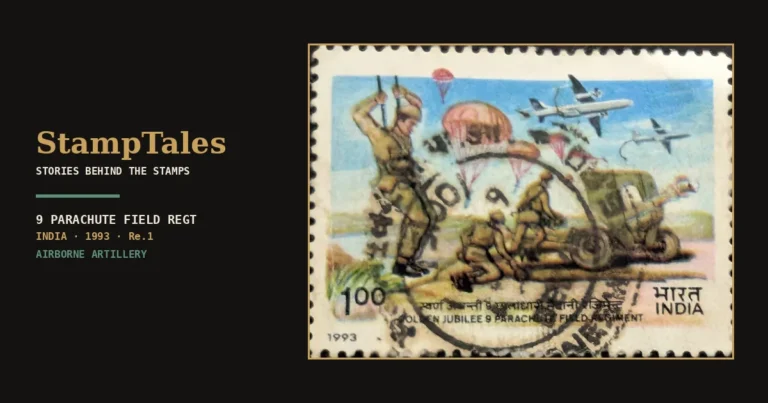
The Golden Jubilee stamp dates the regiment to 1943, two years before it could actually jump. The gun in the picture explains why that gap is the real story.
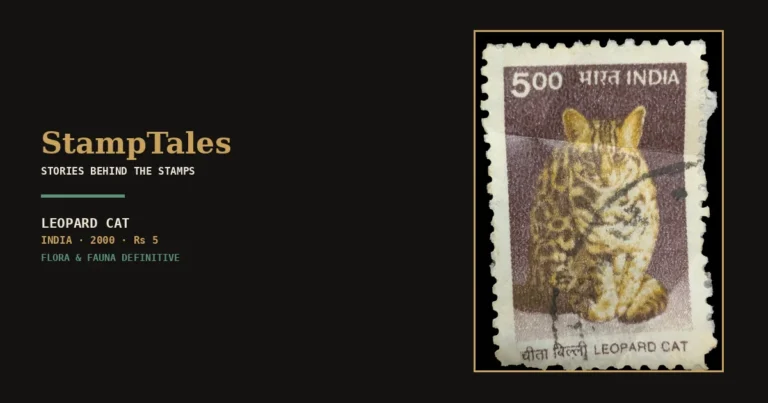
Not a leopard, not a cub – the small wild cat on this five-rupee definitive is the wild ancestor of the Bengal, the house cat bred to look wild.